
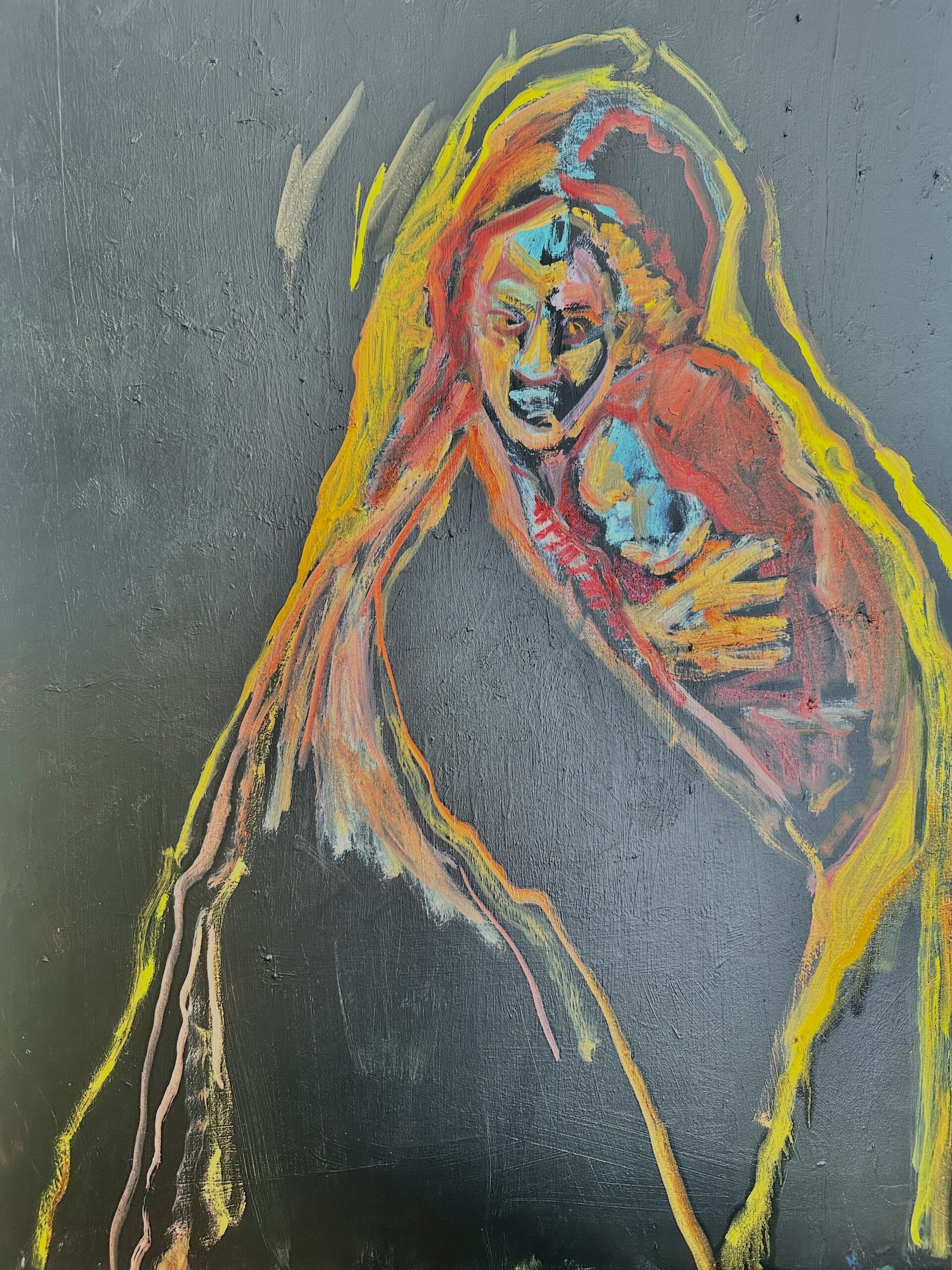
The war in Sudan entered its fourth year on April 15, 2026, one chapter in a long series that has spanned decades. This particular war is a violent power struggle between two military factions: the Sudanese Armed Forces (SAF) and the paramilitary Rapid Support Forces (RSF). They are fighting for control over state resources and governance. The SAF is led by General Abdel Fattah al-Burhan, while the RSF is led by Mohamed Hamdan Dagalo, commonly known as Hemedti. Both the SAF and RSF have been accused of crimes against humanity in this protracted war that has no clear victor. Ten million people have been displaced. Over 150,000 have died.
Deaths and displacements are not the only disturbing feature of this war. The battle is also being fought on the bodies of the Sudanese women and girls. But sexual violence did not start with the current conflict. Sudan has a long history with these particular crimes.
For decades I have watched Sudanese refugees trudge into Kenya. Ten years ago I taught in a school in Lokichogio, a small Kenyan town on the border with Sudan. Almost half of the students in the school were Sudanese refugees. Due to the border dispute and oil sharing disagreements between Sudan and South Sudan (2011–2016). Their stories of home reeked of inexpressible horrors and their bodies bore marks of machetes, burns, whips, and shrapnel.
I will call one of these students Duwana. She was in my class for a year and never spoke a word. Duwana’s mother often sold cakes to teachers in the office during tea time. I spoke privately with her about her daughter’s silence. She said Duwana stopped speaking after militants invaded their village and killed many of the villagers including Duwana’s father. While he was inside their hut they bashed his head in with heavy metals. Then the militia proceeded to rape both mother and daughter just meters away from the body. Several days later along an escape route as they tried to flee to the Kenyan border for safety, another militant group waylaid them. Again, they were raped.
Duwana realized she was pregnant once she was in a refugee camp in Kenya. Her mother told me she gave her daughter a harmful concoction to try and induce an abortion which almost left Duwana dead. It didn’t work. Duwana had the baby in a tent in a refugee camp. I couldn’t imagine her pain, bearing a child from such horrific circumstances. Could a woman even love such a child, like a mother ought to? Duwana seemed devoted to her child however. I remember she used to hurry home during lunch break to breastfeed the baby and hurry back again before the afternoon classes began.
I wanted to suggest counseling but held my tongue. Counselors in Kenya are rare and quite expensive. I knew she and other girls like her would never see a therapist in their lifetimes. Duwana had to bury those memories deep down and act like it never happened. She had to face her depression in silence.
In the next few months, the war ended. The refugees in Lokichogio were jubilant. They chanted about returning home. The nights were filled with dance and music and delicious foods prepared for celebration. The air was full of hope for a better future. Later on, the refugees started heading back home. Including Duwana, her mother, and child.
They didn’t know it then, but their hopes were to be dashed quickly. The wars in Sudan have been recurrent and deadly and in the time since they have overflowed in this enormous, major war. A few years after Duwana headed back home, I bumped into two of her former classmates in the capital of Kenya. I asked about her. They said she had thrown herself into the Nile River with her child, and that their bodies were never recovered.
I ask myself why she did it often. And I answer that it might have been because she feared facing more sexual violence. Sudan has endured a continuous cycle of conflict. There is always a possibility that it could happen again. Or maybe Duwana could not live with the stigma of raising a child borne out of rape. I will never know. I will forever weep for her, and women like her.

Sadly, the war in Sudan is not as covered as other conflicts. Western readers know about Russia-Ukraine, Israel-Palestine, and of course the Strait of Hormuz. But Western ignorance does not preclude international involvement. Sudan’s forgotten war has been heavily influenced by international actors who issue military hardware, money, and fuel to both sides. The UAE has been accused of backing the RSF. Egypt, Turkey, Saudi Arabia, Iran, and Russia have been accused of backing the SAF. It is no mystery what these countries stand to gain by involving themselves in the conflict. Russia has secured a permanent naval base on Sudan’s Red Sea coast, and all outside actors hope to exploit the country’s gold mining sector.
The RSF in particular has been accused of unimaginable brutality. The paramilitary group has its roots in Janjaweed militias utilized in the 2000s by the Bashir government to suppress uprising in Darfur, the country’s capital. RSF is especially infamous for committing mass killings which they often record and share on social media. There are celebrity sadists in their ranks. One, for example, is a Brigadier General named Abu Lulu and often called “The Butcher of the Century.” Lulu is featured prominently in multiple verified videos executing unarmed civilians. The RSF fighters identify as Arab though they are largely recruited from local pastoralist tribes. These groups have adopted Arab cultural and linguistic identities over centuries of interaction and migration. They believe in Arab supremacy, have been found guilty of genocide against non-Arab minorities, and they view the wars in Sudan as a struggle for dominance against “non-Arab” or “African” indigenous communities. RSF targets non-Arab ethnic groups, such as Masalit and Zaghawa, to force them to flee their lands. This strategy has been a pervasive and defining feature of the conflict since the war broke out.
The RSF has been widely accused of using widespread and systematic sexual violence as a primary weapon of war to terrorize, humiliate, and displace civilian populations across Sudan. They consider this variety of torture a form of community domination and punishment. According to Doctors without Borders, one in five survivors of rape in Sudan is under the age of 18. Women and girls are raped in their homes as well as outside their villages, perhaps on journeys to collect firewood and fetch water from the rivers. Sometimes they are abducted and held for months in degrading conditions at RSF temporary camps where they are subjected to repeated gang rapes and forced labor.
In April of 2025 the RSF attacked the Zamzam Camp which was then home to nearly half a million displaced people. During a three-day offensive against the civilian residents of the camp, the group committed gruesome acts of sexual violence. In October of that year the group perpetrated a siege of the neighborhood of El Fasher where hundreds of women were reportedly killed and many others were subjected to sexual violence and torture. The RSF has categorically denied the sexual gender-based violence allegations despite overwhelming witness testimonies.
In Sudanese society the survivors and the families of survivors of sexual violence often live with lifelong social stigma. In Lokichogio I knew many Sudanese women who were shunned by their husbands after sexual assault. The men could not bring themselves to continue viewing their wives as partners — they couldn’t even touch them. These victims were doubly punished: their own husbands treated them as if they were tainted, forever unclean.
These girls and women will never know justice. Their assailants will never be punished. Fighters are immune to legal consequences. As a result, there has been a surge in suicides among survivors. Duwana is one of many.
The world must hear the cries of Sudanese women and girls. Our indifference is a stain on humanity. For Duwana’s sake, and for the sake of the many thousands just like her, we must not look away.