
Juan spoke Spanish into his earpiece, just a murmur of entonces and biens. He had folded Lexus napkins into the pockets behind the front seats so riders could see the Lexus logo. A business card, Juan’s Construction Services, had been taped to the dashboard. I’m not sure whether he used his Uber business to advertise for his construction or his construction business had fallen on hard times.
I left the door open, perhaps so he would have to work harder to leave me there, at this stranger’s home. Whispers continued, even a few feet away from the green Lexus SUV, si, gracias, a donde va?
A small creek ran under the driveway that led up a hill to a white ranch house with bay windows. In early November, the trees bloomed with gold and the bottom of the shallow water not only reflected this phosphorescence, but seemed its very source, as if doubloons poured forth from some secret opening in the earth.
After walking a small circle, I glanced back to make sure Juan was still there. He was, the green door still open and askew like a broken wing. The middle school and baseball field on the other side of the street looked recently redesigned and mowed. Mansions and gorgeous old elms and oaks bounded it on both sides.
A sociology professor lived in the house at the top of the driveway. He had owned it since the early 1970s. According to Zillow, its value had gone up over a million dollars in the last 10 years. That might have to do with the fact that Nashville has become a tax haven for blue-state money post-Covid or that the sociology professor recently revealed that Cormac McCarthy designed and half-built the house’s addition back in 1978.
McCarthy’s friend got him the job. The 43-year-old McCarthy showed up with his 18-year-old girlfriend and did the work with his characteristic obsessiveness, as he wrote sentences, maniacally, drunk with authority and Ishmael-like obsess and portent. He offended everyone related to the project, his workers, the local blacksmith, and eventually the sociology professor, who fired him.
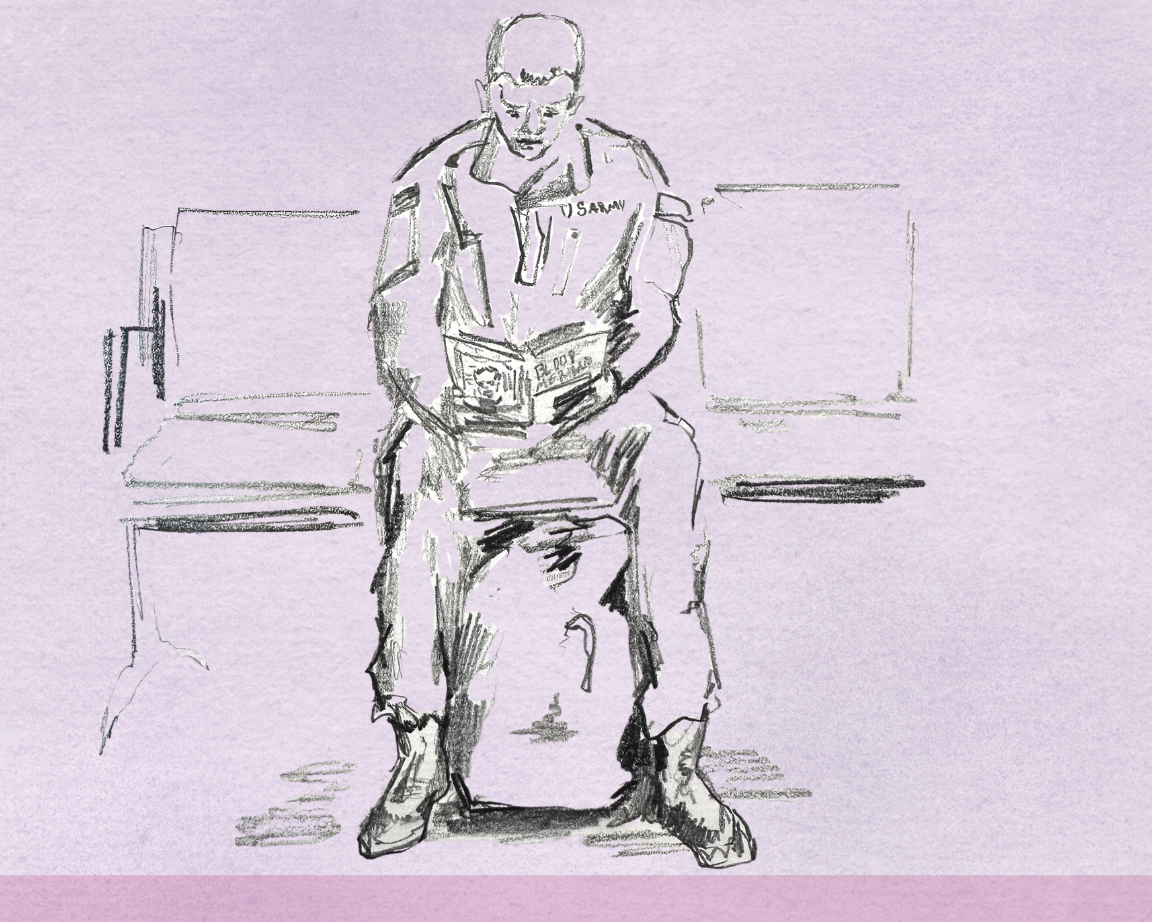
Then he went west for good, and wrote Blood Meridian, which begins in Tennessee, with the Kid, whose mother is dead for 14 years because of the thing “incubated in her bosom” and raised by a drunken schoolmaster who quotes dead poets but somehow fails to teach his son to read.
The driveway seemed very long, the house empty. I didn’t bother to knock. Even if he was home, the sociology professor could only point to the wrong things, what was no longer there. Juan drove me to downtown Nashville. We passed a comedy club with giant comedian faces painted on the side. I stared at his dashboard business card and imagined Juan would have managed to put that addition on the sociology professor’s house over a long weekend.
We arrived at the more crowded area of town, near Broadway, with bars that are three stories tall with balconies that overlook bicycle tavern carts tourists pedal while a conductor serves drinks and makes hooting sounds. On the corner, a young woman in cowboy boots and a very short, frilled skirt argued with her boyfriend. He held the top of her arm. It was a half fight, an almost argument, some tension that neither could fully articulate, and I remembered that I had seen this exact scene before, in Robert Altman’s 1975 Nashville. This 2025 boyfriend looked a bit more anemic than Altman’s imagined one, but the outfits are the same, and the anger, and the girl’s insistence.
The fight broke off and the boyfriend looked at his phone and the girl looked down in the street in a way that one could sense she was looking at herself looking down the street.
More of the movie came back to me, vividly, the ending especially. Barbara Jean, a famous, Loretta Lynn-like singer overcomes her nervous breakdown to sing at a political event for a third-party presidential candidate who promises to end taxation. One young man in the crowd gets angrier and angrier as she croons about how good her mama and papa were to her and then he pulls out a pistol from his guitar case and shoots several times and Barbara Jean collapses on stage.
Her duet partner, Haven Hamilton, a short, magnificently sideburned old country star, shot in the arm by one of the missed shots, grabs the microphone and says, “No! This is Nashville. They can’t do this to us in Nashville. Come on everybody, sing!” It’s funny and very sad. His manager guides him off stage but Haven hands the microphone to Albuquerque, a young woman who has been running from her abusive husband the whole movie, who is convinced she could be famous and beloved if she just had a chance to be herself in public.
Microphone in her right hand, she pulls at the bottom of her short, frilled skirt with the left and looks out in a kind of awe at the crowd from beneath a mop of curly blonde hair. Her voice starts off softly, nervously.
It don’t worry me…
The crowd rolls, people rush on and off stage, past her, in front of her, vaguely, in all directions. A reporter asks, “What happened, What happened?” You can hardly hear Albuquerque. She doesn’t exist. But then the song builds. Her voice, mostly shrill through the movie becomes something else, something with an agony in it, something true:
It don’t worry me
It don’t worry me
You might say that I ain’t free
But it don’t worry me
It’s a wonderfully strange scene — the crowd seems unaware that it has witnessed a murder, except for a few children crying. There is a lot of space between the blank white and black and male and female faces, grass, and all the Coca Colas and hot dogs and 70s outfits, and you couldn’t ever blame any American for anything ever. They begin to sing along. She’s good. She’s special. She’s going to make it. She’s the future. She’s the past. She’s Dolly Parton and Taylor Swift and Lady Liberty and Dame Fortuna and the Virgin of the Rocks.
The price of bread might worry some
You might say that I ain’t free
But it don’t worry me
Toward the end of the song, a black gospel choir provides harmony as Albuquerque staggers around the stage, picking up a busted bouquet of white flowers, flinging them outward. We pan out to a political campaign banner and a giant American flag.
I remembered how in the soundtrack recording of the song, Barbara Harris, the actress that plays Albuquerque, shouts out, “Dead folks is free from pain you know!”
The light changed. We jerked forward a little further into traffic, away from the fighting couple. Juan pulled up next to Jason Aldean’s famous bar, Jason Aldean’s Kitchen and Rooftop Bar: My Kind of Party.
Cormac McCarthy’s Blood Meridian ends differently. The Kid survives a Guignol carnival of slaughter and endless butchery in the far, 1840s American West and still further Mexican West that seems to extend into an infinity of sheer blank desert pain and our own imagination only to get drunk at a bar. He goes to the bathroom. In the bathroom is Judge Holden, a giant hairless man, scientist, comedian, and psychopath, who first taught the Kid to murder in Texas, like really murder, and mean it, and has been trying to murder the Kid for the last half of the book. We don’t know what happens next really. All we can say for sure is that another cowboy opens the door to the bathroom, sees something, then vomits.
I thought of this scene a lot in Iraq, on the last day of deployment, waiting for a plane to take me from Mosul to El Paso — where McCarthy lived for a time after Nashville and before he wrote Blood Meridian. Someone had left McCarthy’s The Road on a table in what used to be Mosul’s civilian airport.
The Road had just come out that year, the year I had just spent in Iraq. I read it straight through, sitting on my rucksack, as we waited for five hours or so for the plane in classic hurry-up-and-wait military fashion. I didn’t underline anything. I never stop and underline anything in McCarthy as I do in other books. Maybe it’s because I am so terrified of what he is saying that I don’t want to linger or — what is maybe more terrifying — that I so perfectly understand what he is saying I have no need to remember it.
Underwater, drowning. It’s the only way I can describe the experience of his sentences. I don’t think it’s a coincidence that his final book, Stella Maris, contains a carefully researched, scientific description of the experience of drowning. Alicia Western, the young polymath who minutely relates the agonies of such a death to her therapist, concludes that she decided against this version of suicide. I can see why. It’s one of the most harrowing descriptions of pain I have ever read, the product of a mind that spent much of its life imagining what it would be like to lose that life.
And yet this water is there for us all to jump in like the glassy sentences of McCarthy’s books. I imagine he named Alicia Western after little Alice tumbling into the mirror in Through the Looking Glass, and little us, born in these United States, gasping for breath in the TV screen of the American West.
I read on. You have to. The sentimental center compels — the father guiding the son through a fallen, cannibalistic modern world in The Road, the ex-priest trying to save the Kid from the devil in Blood Meridian, the brother trying to protect his sister in The Passenger and Stella Maris — even as it twists and blackens at the unfurled edges.
H.G. Wells once said that a Henry James novel is “like a church lit but without a congregation to distract you, with every light and line focused on the high altar. And on the altar, very reverently placed, intensely there, is a dead kitten, an egg-shell, and a piece of string.”
This is likely unfair to James, but I can’t help thinking of it when I think of me reading McCarthy as if in a trance next to that table in the Mosul airport restaurant we liberated of chairs and customers in the name of democracy.
Except on McCarthy’s altar the good reader would have a crucified kitten.
But that too is unfair. Take the kitten down from the cross. Look closer. It’s not a kitten. It’s a tiny man who looks a lot like us. Something like the mirror image of the end of Through the Looking Glass, where Alice strangles the Red Queen and discovers she is in fact strangling her kitten, Kitty.
Alicia Western hangs herself from a tree instead of drowning before McCarthy’s final book even starts. We don’t see this. Only its distant shadow. Off stage as it were. We do see her as a teenager performing Medea on rocks in Tennessee to the delight of her brother, Bobby Western.
The last we see of Bobby Western is him hiding on an island off the coast of Spain. He tells us he is the last pagan on earth. I have no idea what this means, but I feel it has everything to do with kittens.
I only woke up from my The Road fugue in Kuwait, when two privates insisted on moving my deployment patch from my left to right shoulder, proof that I had survived a combat deployment.
“You did it, sir! Be proud!”
My soldiers were always telling me to be proud, but I was never a very good soldier.
I put the book away, where I don’t know to this day, and tried to sleep on the plane that flew back to the United States, staring out the small oval window, thinking of a house we broke into mid-deployment. The family that lived there had a photograph on the fridge, a postcard of a plane with Arabic lettering on the side flying high above the Mosul airport.
Later, when I watched Altman’s Nashville, I would think of that picture. But I’m always thinking of that picture, to be honest. It has no sound in my head. No shouts. No screams. No justifications. Only the image and the magnet behind it. This family’s pride. A picture of a plane in a blue sky.
My high school friends were on the third floor of Jason Aldean’s Kitchen and Rooftop Bar. One of them had decided that they wanted to get out from the Mid-Atlantic area and away from their wives and children. They decided on Nashville why I don’t quite know. I suspect there must be more recent TV shows about the town now. They had been drinking for three days and looked exhausted but otherwise not bad for their mid-40s.
A young woman in a black skirt sang The Killers “Mr. Brightside” and jumped up and down with amazing energy considering she must do that for six to eight hours a day every day. You could scan a QR code that they projected from the blue screen and request songs and the band would play them. I didn’t believe the band actually played their instruments and tried to figure out the difference between this and karaoke and then wondered what made karaoke lesser than any other song we sang that was not ours.
My friends nodded along and so did the older couples along the wall and the bachelorette party at the table behind us, who didn’t seem drunk, but rolled onto their backs and kicked their cow-skinned boots together, perhaps returning to some childhood game. I had no sense of a country at war with itself, soldiers in our city’s streets, fishing boats blown up on the Caribbean, or the dystopian tone we have lived with on the news and our phones for the last ten years.
But the third-floor bathroom felt strangely empty for such a crowded bar. I got out of it as fast as I could.
My mother’s people came by ship
And fought at Bunker Hill
My daddy lost a leg in France
I have his medal still
My brother served with Patton
I saw action at Algiers
Oh we must be doing something right
To last 200 years
This chorus comes from the opening of Nashville. Haven Hamilton — the old, side-burned country music star shot in the arm at the end of the movie — tries to sing the lines, but his backup singers in the recording studio keep on messing it up. Haven gets furious at the kids nowadays just as my friends in Nashville complained about the kids today. Kids never seem to get better at being kids.
As the night went on in Nashville, and my friends and I wandered from bar to bar, I didn’t hear a song quite as bad as “The Last 200 Years,” but most had that basic sentiment: We have survived and therefore are at least somewhat good.
Throughout The Passenger and Stella Maris, Alicia Western imagines dying in other ways beyond drowning and hanging. The last one involves starving to death in the Romanian mountains, her ancestral lands, surrounded by wolves and bears. The animals move about beyond the fire and she is happy to know that when the last fire is ashes they will come and carry her away and she will be their Eucharist.
This would suggest that old McCarthy — as opposed to the star-spangled country singer in Altman’s Nashville — believes that survival has little to do with goodness. It might even mean its opposite. That we have failed in some spectacular way. A dying star that doesn’t have sense enough to disappear. A crippled linguistic freak of a species that has survived its extinction.
Stanisław Lem wonders about this in one of his books. Evolutionary mistakes take a long time to correct themselves for the organisms experiencing the mistake. It’s a blip for most everything else.
To avoid politics, my friends and I talked about food, different kinds of cooking, and then, logically, animals. According to one of my friends, who had become an avid hunter, Wagyu tasted better because the animals are killed by people who love them. I got annoyed and asked how do we know what they are feeling when they are dying? How is it better that they are killed by someone that they think loves them? Wouldn’t that be worse? I’m not sure if I was defending McCarthy here or attacking him but he came up.
My friends are not readers, but they have all read McCarthy. It has something to do with being a man in America. McCarthy himself said he didn’t see the point of novels about drawing rooms. Death was the only interesting subject. Like Wells, he was making fun of Henry James. Teenage boys have very little interest in drawing rooms and no interest whatsoever in Henry James. Forced to read one book by teachers and wives, they all chose No Country for Old Men and at least watched the movie.
So they all remembered the captive bolt pistol Anton Chigurh uses to kill his victims. McCarthy got the idea when visiting slaughterhouses where they used the captive bolt pistol to puncture cow skulls.
That kind of killed the conversation, and the dinner really, as many had ordered steak. The friendly dinner had become, somehow, like everything else nowadays, political. I realized I was talking too much and our lives had spun maybe too far apart to hold quite together anymore.
I ordered another beer, an Irish one in one of those fancy swollen glasses. It had a brownish-red color — ferric. Ferric is the only word McCarthy underlined in Tim O’Brien’s semi-autobiographical novel about the Vietnam War Going After Cacciato. He put the word in Blood Meridian and subtitled the book The Evening Redness in the West. It’s possible that Blood Meridian is a critique, a send up of America’s long history of imperialistic violence. But it’s more likely McCarthy just meant what he said. It’s red all the way down. Ferric, after all, describes earth, not a color. McCarthy would probably see the comparison to Vietnam as drawing room stuff. For sociology professors pretending their country was better than it was in the Nashville suburbs.
Red pooled down the sides of the glass. My friends looked past me like the giant faces on that comedy club and the bald vision of the Judge in Blood Meridian and I thought of all the years that had passed since I first met them and how I hadn’t seen them in many years. Unlike me, they had children now, and like the father in The Road struggled through our cultural and political wreckage with only the tiny fire of themselves keeping their family warm.
Looking back, I shouldn’t have brought up McCarthy. I should have instead told them about that night a few years ago on the border in the west Texas town of Del Rio, above a canyon, overlooking Ciudad Acuna, and how I realized finally after many years in Texas that the sky is not red or ferric, but pink and orange and purple and sometimes often a lovely, whitish green. And the blue! The blue around it, so much blue, blue everywhere you look if you want to look.
We split the bill using Vemno. The dinner broke up and they disappeared back to their hotel without me being quite aware of it.
Later that night, at a bar with photographs of country music hopefuls blanketing the walls, I sat at a table next to another band with a young woman who looked like Barbara Jean, the one assassinated at the end of Nashville. There is a young soldier in Altman’s Nashville too, back from Vietnam, who follows Barbara Jean obsessively through the movie. He stands right next to the killer and wrestles the killer to the ground after the shooting. He does not sing along to Albuquerque’s “It Don’t Worry Me,” but walks by himself in the other direction, a very long walk through a very big crowd.
A young woman appeared at the table next to me. She was visiting her brother in Nashville. Her brother appeared with drinks. We all three of us talked seriously, as if we were figuring out the meaning of the world, even though we could hardly hear each other over the music. She and her brother laughed the same way. I was struck how they might as well have been born in a different universe than Alicia and Bobby Western for one night anyway and thank God for that.
Country music followed me through the next day, as I walked outside the airport hotel through a parking lot thick with leaves over to a Waffle House on the other side of the highway. The chords clanged on in my head like an old band on a far-away old timey stage, just out of reach. Oliver Sacks calls this a musical hallucination. I have these a lot. Sometimes I feel everything in my life is this and if we have memories and souls inside our blood it has everything to do with this music.
Every Waffle House table was filled up with families in flannel sweatpants with shouting children so I sat at the counter next to three big empty cardboard boxes and ordered one of their Texas sandwiches because almost every option at Waffle House has something to do with Texas despite the restaurant starting in Georgia. But maybe that shouldn’t be so surprising. There would be no Alamo without young men from Tennessee and Georgia.
I ate my Texas sandwich and read from a book of Po-Chü-i poems I picked up recently. In one poem he relates that when his friend Chung Tzu-ch’i died his other friend Po Ya broke his lyre against the rocks. It’s not that Po Ya could no longer stand song, but that he would never be able to make music in this world with Chung Tzu-ch’i again.
Montaigne says something similar in one of his essays, when asked why he loved his friend. “Because it was he; because it was me.”
Alicia Western quotes this Montaigne line in Stella Maris. It’s one of three sentences I underlined in all of McCarthy. The other two come from The Passenger, when Alicia talks to one of her hallucinations. “You will never know what the world is made of. The only thing certain is it is not made of this world.”
The plane broke the cloud line about Tennessee revealing an ocean churning toward a second hidden horizon above our earth, one that blushed shellish pink. Down below another plane emerged in the enormous thudding quiet and dropped back into the waves.
I guess I’m a little scared of McCarthy. In dustjacket photographs he is always at an off angle as if they were trying to take a picture of a dog and the dog is deciding whether or not to kill you. I’m not sure whether this was a publicity choice or pure chance but it’s off-putting. I prefer the black and white 1978 photograph of him managing the construction of that addition for the sociology professor in the Nashville suburbs. Like me, like most men in their early 40s, he is losing hair fast, and looks still too young to be wise and too old to be so easily forgiven for doing things like running off to Mexico with a teenage girlfriend. He looks kind of lost and dopey to be honest, like us in the pictures my friends sent out to each other after the Nashville trip. Perhaps it’s better to stay in profile as long as you can, to offer this glance to the world and survive in ways that people who look things straight on never do because a terrified love shoots them dead.
Or perhaps you must have the strength to make life into profile, twist it into a ferric whole in sentence after muscular sentence. Perhaps this is what truth is, an extraction from the Texas desert of a rich explosive substance that destroyed some older world to create our present sputtering light.
Or perhaps that too is a kind of weakness, a turning away from what stares us right in the face the whole time. What is not Judge Holden. The blue sky. Laughing siblings. 40-year-old parents trying to do what they can to make their kids have better lives than they did. Albuquerque finding the perfect lullaby for her traumatized audience.
At the end of Stella Maris, Alicia Western tells her therapist that “it’s possible that the imaginary is best, like the painting of some idyllic landscape. The place you most would like to be. The place you never will.”
“Is this death?” the therapist asks. “Are you talking about death?”
“I don’t know,” Alicia says. “Maybe. Maybe like the expression of a gesture the meaning of which is uncertain. But which in expanding into the world erases a thousand other histories.”
I don’t think McCarthy loved death, not really. No one would write sentences like he could if they truly did. It’s that he couldn’t stand how life disappeared other lives, how the history that survives murders an infinity of others.
And that’s okay. We all find ourselves there from time to time. The first step, as Auden once said, is always murder.
The question, though, is the next step, and the one after that, which direction do you go?
Alicia Western imagines herself dying in that Romanian cave, growing weaker and weaker until she cannot move.
“The water will taste extraordinary,” she says. “It will taste like music.”
It’s a pretty thought, one of McCarthy’s last, and proves to me that he never really left Nashville, or America, despite the vast deserts he stumbled through in search of silence.