
In the heart of Tehran, beneath the surface of ordinary weekday routines, a quiet rebellion pulses through the city’s cultural veins. On a midweek evening in a subterranean bookstore everything seems perfectly ordinary, everything in its place. The clock ticks steadily towards half past ten and only a handful of customers begin to leave. The rest linger, casually browsing the shelves, occasionally exchanging brief glances. They might pick up a book or some stationery, but each of them knows that they and the others are not there to shop.
Once the bookstore doors close those who remain exchange warmer, more familiar looks. In the back room is a modest hall, barely able to hold a hundred people — and in it a musical performance is about to begin. This is what is known as an “Underground Concert.” A common pastime among music enthusiasts, especially in the weeks and months following the twelve-day war with Israel which has injected fresh blood into this community.
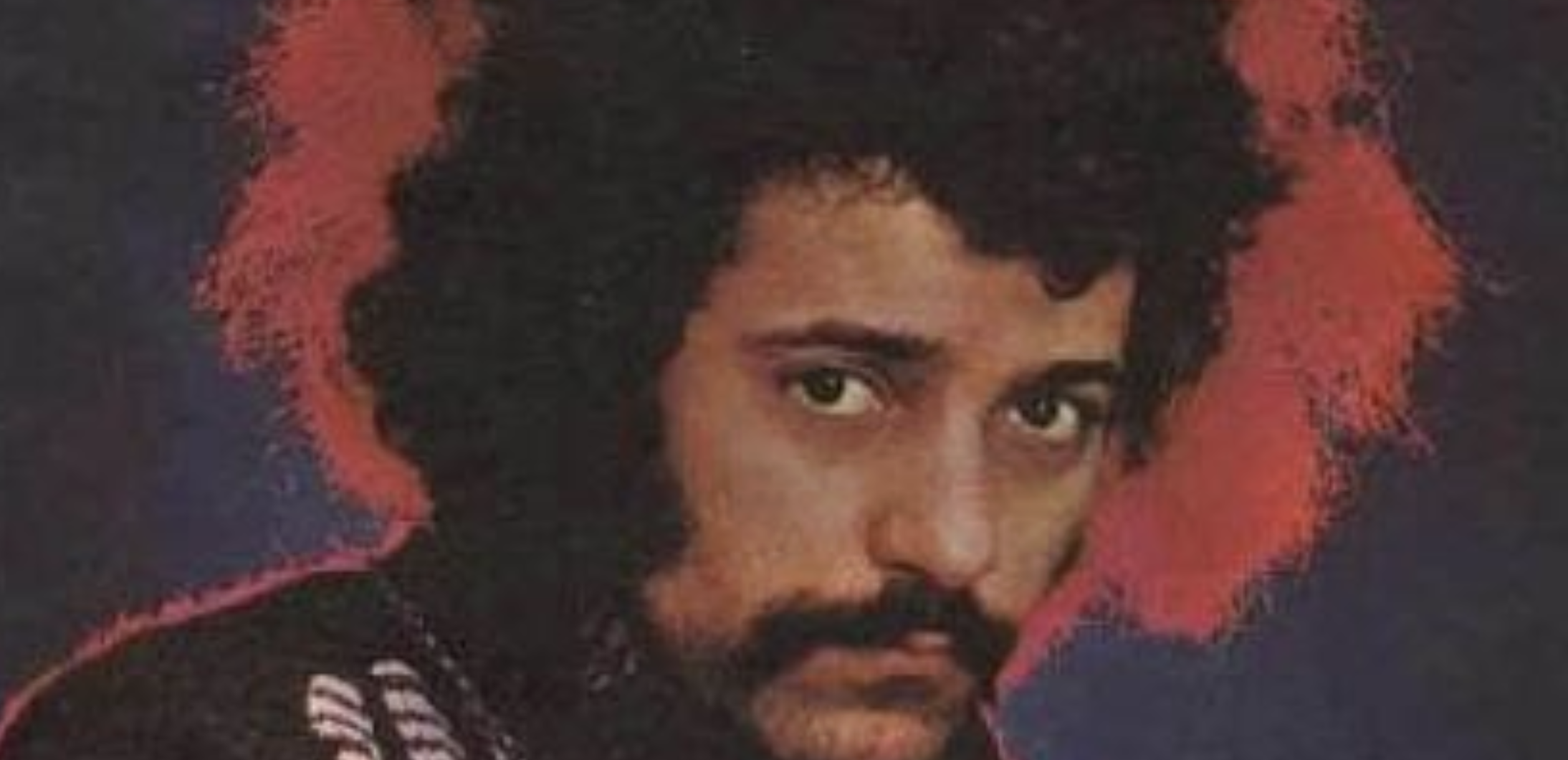
An underground concert is a key event within Tehran’s “Underground Music” — the appellation for the community in Iran which produces music without official permits, usually, though not always, rock. The licensing system for music was established by Iran’s national radio and television in 1971 during the monarchy. When Farhad Mehrad, one of Iran’s earliest rock singers, performed the song “Friday,” rumored to honor a guerrilla attack on a northern outpost, the national radio formed a “Song Council.” From then on, any musician wishing to produce music in Iran had to submit their lyrics to this council for approval.
After the 1979 revolution, the council was transferred to the Ministry of Culture’s Music Department, which expanded its oversight beyond lyrics to include the singer’s voice, instruments, genre, and even album covers. This made music production increasingly difficult, driving many musicians into exile and preventing countless young artists from launching their careers.
During the 1980s and 1990s, rock music production in Iran continued in home studios outfitted with blankets and egg cartons to minimize sound distortion. As the movement grew in the early 2000s new channels for distribution emerged. From garage concerts with a dozen attendees to album releases on platforms like MySpace — some of which required a VPN to access — rock music breathed steadily. By the late 2000s, underground rock had strengthened such that online magazines could host public festivals to select the best rock tracks of the year. Musicians would upload their work to designated websites, and both judges and the public would listen and rate the entries. At least four such festivals were held in Iran during the late 1990s and early 2000s.
During that decade, a reformist era, official licenses and sales and performances were granted to a few rock productions. But that brief reprieve flickered out with the end of the reformist government. Pop music held fairly steady, but rock, which lacked a large audience and commercial appeal, suffered. Many rock artists emigrated, some performed abroad in hopes of finding a foothold in the Iranian diaspora, whose tastes leaned more toward pop and traditional music. Others, such as Mehdi Jami, then editor of Radio Free Europe, attempted to organize Iranian rock festivals outside the country. Jami did host a rock festival in the Netherlands but turnout was paltry. These efforts helped keep rock alive, but weren’t enough to fully revive the genre.
Among the few rock stars of that period was Mohsen Namjoo, who was forced into permanent exile following the conservative leadership’s return to power in the mid 2000s. The band O-Hum, active since the late 1990s and known for creatively blending rock with Hafez’s poetry in hopes of securing official permits, held unsuccessful concerts in Germany. Eventually, its members returned to Iran and worked in pop bands to make ends meet. Other fusion groups, like Avijeh, which attempted to combine traditional Iranian instruments with rock, saw some of their work broadcast on state TV and even received concert permits for a few nights. Yet, due to their inability to secure consistent licenses or legally sell albums, they eventually disbanded.

Each collapse and disappointment in formal performance breathed new life into Iran’s Underground Music scene. With the advent of digital music production tools, the subterranean space, upon which the cultural authorities imposed licensing restrictions, found greater freedom to practice, produce, and distribute music abroad. Babak Riyahi-Moghaddam, bassist and member of Avijeh and O-Hum, explains: “The reality is that the Underground Music scene in the 2010s and today is incomparable to the 1990s and early 2000s. Now, one person with a single computer can handle the entire production process. There’s little need for studio rentals or group rehearsals. Three decades ago, things were very different. Compared to what underground music experienced in the 1990s and 2000s, today’s Iran feels like Los Angeles or New York.” Riyahi-Moghaddam may be right about production, but when it comes to live performances, Iran’s reality is far removed from global music capitals.
Back in the shuttered bookstore, where underground concertgoers still linger, the performance hall doors finally open. The space is modest: a bench against one wall, a single exit behind the audience, and a stage barely thirty centimeters high. The audience must stand, a standard for rock shows but unusual for most Iranians, who are used to pop and traditional music concerts. Before the performance begins, organizers warn that although they won’t confiscate phones as they do at other underground events, anyone caught recording will be ejected. Everyone respects the rule, and for the next hour, no phone lights up. The music is classic rock from the 1980s and 1990s — naturally, in English.
Iran’s rock has long covered iconic global rock tracks. In the 1960s and 1970s, this was mainly due to limited access to original vinyl records. The only way to hear contemporary global music was through local covers. Musicians would master a record by ear until they could reproduce it accurately. At concerts like those held at Amjadieh Stadium in the 1970s, most songs performed were covers of popular European and American songs. After the revolution, the movement continued, though cafés and restaurants no longer hosted rock performances and new records stopped arriving from abroad. Musicians had to rely on pre-revolutionary vinyls. As a result, Iran, which had been in step with global rock in the 1960s and 1970s, fell behind.
The prominence of English lyrics in Iranian rock is about more than the global dominance of American culture. Some Iranian rock musicians believe Persian lyrics are difficult to adapt to rock’s rhythm and tempo. Others argue that a truly capable Persian lyricist for rock has yet to emerge. Fereydoun Foroughi’s attempt, for example, veered toward pop-rock, not pure rock. The continued lack corroborates a particular social conception: From music censors to producers, listeners, and even rock musicians themselves, many believe rock sounds foreign to Persian ears. Thus, Iranian rock is perceived as elitist, music for expats, returnees from abroad, or culturally hybrid individuals straddling the Iranian and Western worlds.
Kamran Khashaei, guitarist for Seven Soul Brothers, told Radio Free Europe: “Rock in Iran has always been politically unnatural. We created a little Europe for ourselves and the bourgeois kids and foreigners in uptown Tehran. In the 1990s and even earlier, rock wasn’t just about riding a global wave; it was a form of protest. It was the music of educated, modern youth. Underground concert audiences were mostly friends, acquaintances, and returnees, not ordinary people.”
Shadi Vatankhah, editor of Tehran Avenue, which hosted several independent underground music festivals, echoed this sentiment: “I believe our Iranian roots have little to do with rock or jazz. But after the revolution, with the arrival of Betamax, the dominant global music of the 1980s, rock was heard and imitated in Iran. Pink Floyd’s ‘The Wall’ and Woodstock records were passed around and replayed endlessly.”
Of course, there have always been efforts to create fusion music. Before and after the revolution, Kourosh Yaghmaei tried to blend rock with regional Iranian music. In the 1990s, the Avijeh group in Iran sought to combine traditional instruments with rock instrumentation. The band O-Hum, which layered rock over Hafez’s poetry, gained a large and devoted following. Mohsen Namjoo, who fused rock with local instruments, folk songs, and even verses from the Qur’an, attracted a broad audience inside Iran during the 2000s and rose to international fame. His work remains popular to this day. Yet rock in Iran still largely revolves around covering iconic English-language rock songs. The underground concert held in the bookstore was limited to an hour and a half of famous and beloved rock songs from the 1980s and 1990s, with an audience that banged their hands and sang along.
The underground concerts are not always held in private studios or backroom venues. Sometimes attendees must travel kilometers outside the city to listen to music in abandoned warehouses. But the atmosphere isn’t always bleak. Since artists are only required to obtain permits from the Ministry of Culture and the Police for official performances, some rehearsal sessions in public venues are marketed and ticketed as underground concerts. Tickets are often sold via Telegram channels and promoted through Instagram pages. In the past, Iranian police have declared rock music a form of “Satanism” and cracked down on underground concerts for facilitating “mixed-gender parties.” Yet in recent years, such pressures have steadily declined. The rise of café culture since the early 2010s has helped create more informal spaces for musical performances in Iran, especially in Tehran.
An underground concert organizer who requested anonymity for safety reasons explained: “We used to be much more cautious when planning events. Even now, for some shows, we still collect all mobile phones beforehand and avoid public advertising. However, the truth is that the environment for unlicensed events, whether rehearsals or semi-official performances, has undergone significant changes since the war. What we’re doing now would have been far more difficult, maybe even impossible, before the war [he was referring to the “twelve day war” with Israel this past summer]. And we also have to consider that last year’s presidential election eased the pressure. Compared to the previous administration, the past year has seen far less crackdown on cultural and artistic activities.” He meant the snap presidential election held in 2024 after the helicopter crash that killed the conservative president. A reformist president replaced the one lost in the crash. This shift prevented the escalation of planned crackdowns by conservatives on cultural figures, artists, and ordinary citizens.
This sense of freedom and reduced pressure is not only visible in underground concerts but also in street performances. The atmosphere feels so open that some cafés and cultural centers have collaborated to host Jazz Music Weeks. After the death of Ozzy Osbourne, whose image two decades ago could have been portrayed on Iranian state TV as the leader of a satanic cult, a shopping mall in western Tehran hosted a public, officially sanctioned concert where several rock musicians played Osbourne’s music for over an hour, with his images projected on large video walls.
Tehran’s Iranshahr Street, a hub for artists and students, has also become a venue for consecutive nights of street rock performances this fall, and the spot has gained significant traction on Instagram. Yet, the glass ceiling above this fresh freedom still asserts itself. One underground rock band in Tehran recently felt its sharp edge. After videos of a young rock band performing “Army of Seven Nations” live on Iranshahr Street went viral, the censors cracked their hips. The musicians faced punishment for the popularity of the clips of their performence and their broadcast on Persian-language satellite channels. The café that hosted them and the broader street rock scene in Iranshahr felt the repercussions as well. The band’s social media pages were shut down by police order, the café was sealed, and other venues were forced to suspend rock performances until the controversy subsided. Conservatives accused the musicians and their fans of violating “Islamic values.”
On the opposite end of the political spectrum, opponents of the regime accused the performers, attendees, and the entire music and entertainment industry of whitewashing the government. The pressure escalated to the point where the musicians had to clarify, via posts on friends’ social media accounts, that they had no political agenda and were not part of any government initiative or, as some accused, a government “safety valve,” a shorthand for the theory that the government allows some artists leeway in order to preserve the illusion of freedom and to keep the public from boiling over into an uprising. Kiamahr Rahjouei, one of the performers now known as “the guy from Iranshahr Street,” said in a video after his page was shut down: “It feels like we’ve been cursed. After our pages were closed, many people deleted their chats with us out of fear and stopped answering our calls. In this deeply polarized society, both extremes, supporters and opponents of the regime, share our videos and project their own narratives onto us without ever asking why we perform rock in the streets. Honestly, I’m not even sure why we continue to do it. Maybe we crave attention. Maybe we’re moved by the joy of the crowd. Maybe we’re afraid that if we retreat, others will follow. As the guy now known for playing rock on Iranshahr Street, I feel I need others to help build the world I dream of, a world where instead of judging each other, instead of condemning each other for our tastes and desires, we headbang together and understand that helping others grow helps us grow too.”
Babak Riyahi-Moghaddam has a reason why they continue playing rock despite all the hardships: “I’ve worked with some of the biggest names in Iran’s music industry, from Googoosh, the most famous Iranian pop star in the last decades, to many top-tier singers inside Iran, including opera singers like Mohammad Noori. I’ve collaborated with the country’s leading composers, but the truth is, when I play rock in cafés and small halls, when I perform face-to-face for a small audience, I feel perfect. When I started performing in cafés, many people criticized me and asked why I was doing it. My answer is: because I enjoy it. I enjoy standing beside people who listen to the sound of my instrument.”
Kiamahr Rahjouei, who is at least twenty years younger and less experienced than Riyahi-Moghaddam, is fueled by similar sentiments: “For me, the Iranshahr event was the beginning of a new world, a world we can build together, and to reach it, we must accept all the hardships that may come our way. It’s true that, thanks to Persian-language satellite TV channels [which oppose the Iranian government], the nights of Iranshahr have been destroyed. But the image of that ideal world has not been erased from my mind. Not even the armies of seven nations could stop us.”
Street and café performances, along with semi-official and unofficial shows in small, closed-door venues with strict no-recording policies, are part of the ongoing effort by Iranian rockers. Iranian rock is a pulse beneath the surface, a quiet defiance against erasure, conformity, and silence. It is art at its most human, which is to say art its highest expression. Whether in dimly lit backrooms, echoing street corners, or the fragile spaces between censorship and celebration, its rhythms carry the weight of memory and the hope of transformation. For every headbang in Iranshahr, every whispered lyric in a shuttered bookstore, and every chord struck in exile, Iranian rock insists: we are still here, underground, but alive.