
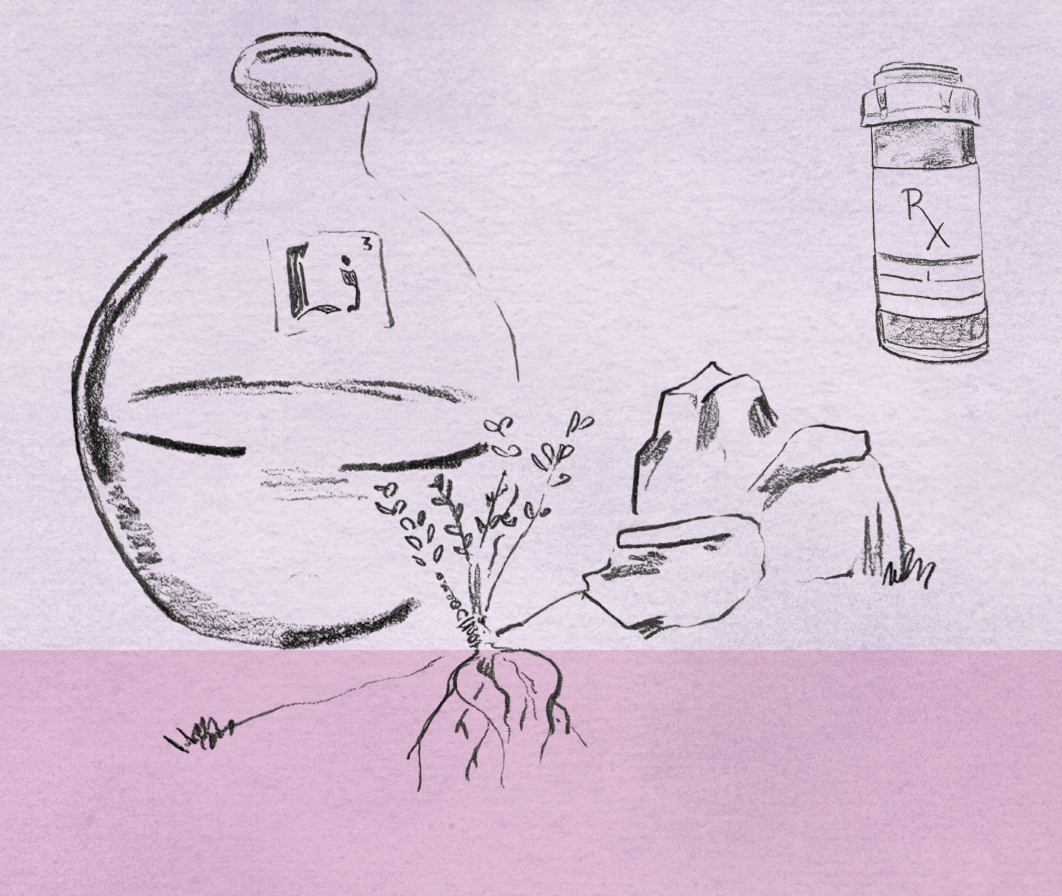
I
Saint Fillan’s left arm glowed in the dark, the better to read Scripture in his cave. He was born in Munster with a stone in his mouth. When his father Feriach, son of Cellach Cualann, King of Leinster saw the stone, he threw young Fillan in a lake. Saved by a passing priest, Fillan received the monastic habit at the Abbey of Fintan of Tagmon. In 717, he emigrated to Scotland with his mother and became abbot of a monastery in Fife. He lived in a cave in Pittenweem.
Two and a half kilometers southeast of Tyndrum, what is now called the River Fillan bends and deepens naturally into what is now called Saint Fillan’s Pool. There, Fillan is said to have healed the mad, sending them naked down to the bottom of the pool, where they retrieved a set of stones and placed them on a set of cairns in the water. The cure persisted for a thousand years but today the cairns and stones are gone. In the nineteenth century, a wild bull was thrown into the water by a local hoping to save himself the work of breaking it and the pool lost all its power.
Stones and water, stones found in water, stones turned to dust and salt by water: The Egyptians warded off insanity with amulets made of lapis lazuli. The Greeks believed that hematite, worn or ingested, could stabilize the mind. In the second century AD, Soranus of Epheus, prescribed alkaline mineral water as a remedy for mania. In what is now Colorado, the Ute called the Glenwood Hot Springs “Yampah” — big medicine — capable of curing nearly any ailment of the body or the soul. In India, unmada gajakesari rasa — made from mercury, sulfur, dhatura seeds, and arsenic — is indicated for psychosis. For mania and phobia, brahmi ghrita is used instead. In China, when jade failed, long gu (dragon bone) and mu li (oyster shell) were used to anchor, settle, and restore the mind and spirit. In Ghana, at the beginning of the lunar cycle, the madman went with the healer to a refuse dump and together they made three holes in the ground. The middle hole was filled with oil. The other holes were filled with salt. The healer then commanded the moon to release the patient’s mind.
In Arabia, the bezoar stone was placed against the skin to alleviate a melancholic disposition. The Aztecs used obsidian. In London: amber, red coral, cinnabar, and bloodstone. In Mali, the proper stone varied by the malady: one cure for wede welewele (hot madness), another for wede kalal (cold madness), yet another for wede pirou (true insanity). For many centuries, the French believed that the pierre de folie — the stone of madness — could be found inside the skulls of the insane; for a fee, medieval surgeons would drill a hole in the skull to pluck it out. By the eighteenth century, in France and later England, mental hospitals dedicated to the traitement moral of Philippe Pinel provided bathtub time to every patient. In southern Siberia there is a lake slightly larger than Belgium, called Lake Baikal. For many years, the tench fished from those waters were cut open, and rubbed in mithridate then hung, guts and all, around the necks of the insane. In the earliest madhouses of the Americas, patients received hydrotherapy: continuous dunking in a freezing pool, the “cold water shock” cure.
In the fourteenth century, the Cherokee began to practice hot spring medicine in Georgia. By the nineteenth century, the folk medicine of white Americans maintained that a common rock salt found in those spring waters could cure asthma, diabetes, uric acid diathesis, rheumatism, and gout. The spa at Lithia Springs played host to Presidents and Vanderbilts, and once, Mark Twain. A special train came in direct from New York City. Its waters were bottled and sold; imitators soon followed. Lithia could be found in rocks across the world, in nearly every nation. “Please send a case of Lithia Water as soon as possible,” President Cleveland wrote in 1895, shortly after returning from his own trip down to Georgia. There are no reports of lithia curing the insane. But there was a lithia craze. Lithia beer, lithia tonic; the Sears Catalogue sold “lithia tablets” dissolvable in ordinary water. In St. Louis, in 1929, Charles Leiper Grigg launched a line of tonic water: 7-Up Lithiated Lemon Soda.
During the world wars, doctors recommended lithia salts as an alternative to sodium. Patients with high blood pressure, heart disease, and diabetes, sprinkled it at dinner time. Restaurants offered it in shakers. In such high, unregulated doses, some patients found their vision blurring. Others felt nauseous. They shook and vomited. Some had seizures. Some fell into comas and died. In 1949, the FDA instructed citizens to “stop using this dangerous substance at once” then ordered it taken off the market. Inspectors raided pharmacists, confiscating lithia where they could find it. The American Medical Association agreed: whether in stone form or salt or mixed in water, lithia was poison. In any case, they had conducted studies. Like so many magic stones and healing waters, folk remedies and so-called “natural medicines,” there was no true medical benefit at all.
II
John Frederick Joseph Cade grew up on the grounds of a madhouse. In 1919, his father came back weary from Gallipoli and France, plagued by nightmares, nervous and angry. He’d been the village doctor of Murtuoa, Victoria, a village some two hundred miles north-northwest of Melbourne. Now, too weak for the demands of private practice, he took a government job: medical superintendent of a hospital in the state Mental Hygiene Service. By tradition, the superintendent and his family lived in a house on the hospital grounds. His father was transferred several times. Every few years a new asylum, a new home, somewhere between the wards and walls.
John was left-handed. He excelled at every subject in school. He liked tennis and golf and particularly boxing; he learned the basics from a patient in his father’s care.
In 1933, John graduated from the University of Melbourne with a medical degree. The son of a doctor, he became a doctor for children, but shortly after taking up a post at the Royal Children’s Hospital in Melbourne, he developed bilateral pneumonia and was confined to bed for weeks. A year later, he married one of the nurses who had cared for him. In 1936, at twenty-four years old, he followed his father into the family business and was posted to Beechworth Mental Hospital, near the border between Victoria and New South Wales, an asylum where he’d lived when he was nine.
John Cade was a naturalist. He loved birds, loved insects, loved shit. He had an encyclopedic knowledge of paw prints. His default activity was investigation. His greatest pleasure, by his own account, involved the discovery that contrary to widespread belief, the Australian white-backed magpie and black-back magpies were not separate species: “I discovered the answer by a careful roadside count when I drove one summer day from Wagga to West Brunswick,” he later told an audience of admirers. He looked out the window and saw grey in the middle. Wasn’t it obvious? Did nobody pay attention to the world? Many years later, his son Jack recalled another drive where John looked out the window and announced that there were elephants ahead. There are no elephants in Australia, but soon enough, several appeared. The circus was on tour. Another son, Peter, told biographers the best way to understand his dad was this: when Peter was a boy, John showed him the scat of the emperor gum moth caterpillar. Look at it closely. It has six-sides. You can extrapolate the shape of its anus.
To anybody who would listen, John said: I am not a scientist. I’m only an old prospector, who happened to pick up a nugget.
During his first year at Beechworth: an epidemic of bruising among the patients not attributable — as such things were typically attributable — to excessive force by the staff. “All the produce” produced in the hospital gardens “was taken to the hospital kitchen and thrown into the huge copper cauldrons where every thermolabile vitamin, and especially ascorbic acid, was very thoroughly exterminated,” he wrote in a report of his observations, taken both at Beechworth and at Mont Park Mental Hospital, where his father remained superintendent. The patients had scurvy. He saw their diets reformed.
In 1938, Cade produced a paper on the death of a patient from a hitherto unknown cause of widespread arterial spasm. In 1940, transferred to Bundoora Repatriation Mental Hospital, he co-authored a paper on antibody levels during an influenza outbreak; in the same issue of the same journal, under his sole byline, was a study establishing a statistically significant difference in average age of schizophrenia onset by sex.
In 1941, he arrived in Malaya, a general medical officer of the Australian Imperial Force. Within a few months, the Commonwealth was forced to retreat to Singapore. They endured just over a week under Japanese aerial bombardment before a land invasion forced their surrender on February 15, 1942. John Cade spent the next three and a half years in Changi Prison. Prisoners were starved and sometimes tortured, beaten, and executed without warning; many more came down with pellagra, stomatitis, and heart disease. With other doctors in the camp, John developed a vitamin-rich soup made from local grass to supplement the daily polished rice ration. The soldiers called it Tiger’s Piss. On September 5, 1945, the advancing forces of the 5th Indian Division liberated Changi. On September 26, while still sailing back toward the north Australian coast, John wrote his wife: “The old brain box is simmering with ideas.”
To the audience of admirers: “My own research efforts have been sporadic over many years. Most have ended in blind alleys. Some have been successful. All have been fun. In the process I have learned a great deal about the habits of termites, the length of snakes’ tails, the meaning of the kookaburra’s raucous cry, the length of the vagus nerve in the sleeping lizard, the eccentricities of lightning, the dermatological metamorphoses of chameleons, the ecology of my own garden, and en passant something of the causes and effective treatment of manic-depressive illness.”
En passant: After the war, John Cade was made director of the Bundoora Repatriation Mental Hospital and moved his family into a house of the asylum grounds. The two hundred patients there included many manic-depressives and John became preoccupied by the “absolute failure” of psychotherapy to cure them. “Psychopathological explanations seemed to me to be singularly unconvincing,” he reflected, “and completely useless when it came to treatment or prevention of attacks.” He wanted to know the “essential nature” of the disease, and like many naturalists and herbalists and folk healers before him, he knew that the malady must come from some imbalance in the harmony of the body, in excesses or deficits or toxins.
In 1946 or 1947, John began collecting urine samples from his manic patients and stored them in jars on the top shelf of the family refrigerator. He kept guinea pigs in the back garden, and began injecting them with piss. It took .75 milliliters per thirty grams of normal urine to kill a guinea pig, but the urine of maniacs could kill at .25ml/30g. Twenty minutes after injection they began to shake. They lost their balance, twitched, then convulsed and passed out and kept convulsing in a state of status-epilepticus until they died.
John Cade separated the urine into its constituent waters — uric acid, urea, and creatine — and injected new guinea pigs with each in turn. He tried them in combination: urea and creatine (no effect), creatine and uric acid (no effect), uric acid and urea: most lethal of all. To increase the yield of uric acid in the solution for further testing, he introduced a solvent, lithium urate, but the results baffled him: where before this mix was lethal, now only half of the guinea pigs died. When he used lithium carbonate instead, every guinea pig survived.
Curious, he made a solution of pure lithium carbonate, .5%, an exceptionally high dose, and injected it directly into the remaining animals. “Those who have experimented with guinea pigs know to what degree a ready startle reaction is part of their make-up,” he later said. He was shocked when “after a latent period of about two hours the animals, although fully conscious, became extremely lethargic and unresponsive to stimuli for one to two hours before once again becoming normally timid and active.” During that period, the pigs “could be turned on their backs,” handled, injected, fussed with and yet they “merely lay there and gazed placidly” ahead. In this, somehow, John Cade heard the calling.
John scoured the books of old apothecaries. Lithium salts had once been prescribed for heart disease and gout; in the United States, it was still sometimes used as salt. The British Pharmacopoeia, Culbreth’s Manual of Materia Medica and Pharmacology, Garrod’s Nature and Treatment of Gout. He settled on 600mg lithium carbonate, or 1200mg lithium citrate, reckoned in “grains” of roughly 60mg a piece, taken in three doses throughout the day. In February, 1948, Cade administered lithium to himself for two weeks without taking ill. His wife, long tolerant of the scatological samples and jars of urine in the kitchen, the guinea pigs in various states of rigor, begged him to stop. In March, John chose a patient.
WB, as John Cade called him, was “a little wizened man of 51 who [was] in a state of chronic manic excitement.” He was “restless, dirty, destructive, mischievous, and interfering,” long “regarded as the most troublesome patient on the ward.” WB had been diagnosed with manic-depression thirty years before. He had been committed for five and was never expected to leave Bundoora. WB “commenced treatment with lithium citrate 1200mg thrice daily on 29 March, 1948,” John later wrote.
On the fourth day, the optimistic therapist thought he saw some change for the better but acknowledged that it could have been his expectant imagination (it was April Fool’s Day!). The nursing staff were noncommittal but loyal. However, by the fifth day it was clear that he was in fact more settled, tidier, less disinhibited and less distractable. From then on there was steady improvement so that in three weeks he was enjoying the unaccustomed and quite unexpected amenities of a convalescent ward. As he had been ill so long and confined to a closed chronic ward he found normal surroundings and liberty of movement strange at first. Owing to this, as well as housing difficulties and the necessity of determining a satisfactory maintenance dose, he was kept under observation for two further months.
He remained perfectly well and left hospital on 9 July 1948, on indefinite leave, with instructions to take a maintenance dose of lithium carbonate, 300mg twice daily…He was soon back working happily at his old job.
Over the remainder of 1948 and into 1949, Cade administered lithium to nine more manic-depressives in his care, as well as six schizophrenics, although the latter group derived no apparent benefit. Nearly all of his patients recovered like WB. Several left the hospital. Only one — whose persistent physical reaction to the medication did not abate with a reduced dose — left the study and returned to madness.
In September of 1949, as the FDA took action in America, the Medical Journal of Australia published John Cade’s account of his lithium cure. It remains the most cited paper in that journal’s history. Cade was thirty-seven years old. Happy to have triumphed by way of rocks and water where decades of official psychiatry had failed, he returned to scat and pawprints, the kookaburra’s cry, and lightning.
III
Although: WB didn’t leave the hospital forever. Many years later, Cade picked up his story:
It was with a sense of the most abject disappointment that I readmitted [WB] to hospital just six months later as manic as ever but took some consolation from his brother who informed me that [he] had become overconfident about having well for so many months, had become lackadaisical about taking his medication and had finally ceased taking it about six weeks before. Since then he had become steadily more irritable and erratic. His lithium carbonate was at once recommenced and in two weeks he had again returned to normal. A month later he was recorded as completely well and ready to return to home and work.
So it went for months: WB on lithium, doing well. WB off lithium, back to the hospital. In this way, WB became the patron saint of all lithium patients who would come after.
And in another: In March, 1950, approximately a year after his first dose, WB still complained of constant stomach pain. He had “dyspepsia, anorexia, and vomiting.” Cade vacillated. He stopped the lithium: In his notes, he wrote that WB was “better off as a free restless case of mania rather than the dyspeptic, frail little man he looks on adequate lithium.” But by May, Cade wrote, WB was “manic, restless, euphoric, noisy, dirty, mischievous, destructive, flight of ideas and thoroughly pleased with himself.” This “state” was “as much a menace to life as any possible toxic effects of lithium.” He put him back on twenty grains, three times daily. Before the month was out, WB was “quieter but miserable and asthenic;” Cade discontinued lithium again but it was too late. Another guinea pig: he suffered three seizures, fell into a coma, and on the 23rd of May, 1950, EB died, not yet sixty.
The most remarkable fact about John Cade’s experiment is the way he seemed to guess the therapeutic dose by magic. Had Cade begun his patients on a single grain of citrate it would have had no effect, he might have concluded the experiment in failure. But too much and lithium is toxic. In too high doses, some patients find their vision blurring. Others feel nauseous, have tremors, and begin vomiting. Some have seizures, fall into comas, and die. The therapeutic dose, generally recommended between 600 and 1,200mg/daily is only an inch below the toxic dose. Some patients have a higher tolerance. Lithium administered 3,600mg/day is not unheard of, although even the most durable constitutions can only tolerate it for a little while. Some patients have a lower tolerance.
In the United States alone, the FDA estimates that some 2,700 people die each year from natural medicines. Over 50,000 are poisoned, sustain organ damage, or fall sick but live. The global incidence of death by folk remedy — by rock and salt and herb and water, by the blood of a dove poured over the body, by exposure chained by night beside a holy pond — cannot be known.
For many centuries, in China and in the Balkans, the aristolochia herb was dried and boiled in tea to treat edema, arthritis, rheumatism, menstrual pain, wounds, and snakebites. Prolonged consumption of aristolochic acid, contained in the herbs and retained through any preparation process, is fatal to the kidneys. Even after the treatment was discontinued, many patients developed cancers of the stomach, liver, bile ducts, bladder, ureters, and renal pelvis.
In 1952, John Cade became superintendent of Royal Park Mental Hospital, the most prestigious in Australia. He banned the use of lithium there. But his discovery had already taken root among the folkways of Australian psychiatrists, within the wisdom of the many healers, like him, who were struck by the absolute failure of artificial medicine, who wanted to know and treat the essential nature of the disease.
IV
In August, 1950, in Australia, A patient at Ballarat Asylum, west of Melbourne, was briefly cured by lithium. She began to seize, then fell into a coma, then died.
That September, 1950, in Australia fifty patients at Sunbury Mental Hospital, east of Melbourne, received the lithium cure. Most improved. Twelve left the hospital entirely. None died.
In 1951, in Australia, one hundred patients at Mont Park Hospital, near Melbourne, received lithium for two years. All but one of thirty manic-depressives found relief. Seventy other patients — largely schizophrenics and pure depressives — remained mad. None were troubled by anything more serious than an upset stomach. Two doctors, Eduard Trautner and Charles Noack, believed the secret was not in the dose, but in the level of lithium circulating in the blood. They devised a way to measure it by flame photometry, a kind of hemalurgy, where the blood is held before a flame and its contents are divined by the colors it inspires.
Between 1951 and 1954 in France ten papers reported on the lithium cure; patients at Saint-Alban Hospital were the first outside Australia to take it. Their mania abated as if by magic. French interest in the Australian cure is attributed to the popularity of mineral springs in that country, to the way its doctors knew the power of natural remedies in salts and stones and waters. But several accidents letaeux followed. The French doctors returned to electro-convulsive therapy, the standard treatment, backed by decades of official medical psychiatry.
In 1954, in Perth, one hundred and four patients were treated with lithium. Patients once “manic, excited, and restless” become calm.
In 1954, in Denmark, Mogens Schou, a fellow of the Psychiatric Research Institute of Aarhus University, performed the lithium cure’s first randomized, placebo-controlled trial. Of thirty-eight maniacs, half received the cure. More miraculous still: while the ministrations of a century of psychiatry had barely been able to stop attacks of mania after they’d begun, lithium appeared prophylactic. Patients who took the mineral cure daily stopped suffering new episodes altogether. Published in the Journal of Neurology, Neurosurgery, and Psychiatry, the study was met with silence.
In 1958, in Rome: At the first International Congress of Neuropharmacology, Schou held his tongue until the general discussion on the closing day. Lithium had not appeared in any paper, any panel, any forum. “On the chemotherapeutic firmament, lithium is one of the smaller stars,” he said, “But its light appears unmistakable, and it may turn out to be more steady than that of several other of the celestial bodies which now shine so brightly.” Mogens Schou was not a poet, but he tried.
In 1959, in Denmark Schou published “Lithium in psychiatric therapy: stock-taking after ten years.” The stock remains low, but fifteen reports have been published across the world, documenting nearly five hundred manic patients, just shy of ninety percent, were said to have been cured.
In 1960, in the United States, lithium was given for the first time to Americans at the University of Michigan. The study was met with silence.
In 1961, in France, lithium was approved for psychiatric use. It was already permitted in Australia and Denmark, and in several smaller nations, where doctors do not always wait for the blessings of their leaders.
In 1963, in England, several hundred lunatics received lithium for the first time. It is the first study said to be “properly controlled.” But there were many skeptics among the doctors of that country.
In 1964, in Denmark, eleven maniacs, studied over many months and years, confirmed the mineral’s prophylactic properties, its capacity to ward off possessing spirits. But eleven is not so many, really.
In 1966, in the United Kingdom, lithium carbonate was officially approved for use in clinics. In the United States, the first lithium clinic opened at Columbia University, despite the warnings of the FDA.
In 1967, in Australia, Mogens Schou reported that eighty-eight patients received lithium for six and a half years. The frequency of their episodes declined by nearly ninety percent. Lithium was approved for clinical use in Germany.
In 1968, in England, the silence of biomedical psychiatry was broken. In Lancet, several doctors leveled the usual charges against natural medicine: lithium is “dangerous nonsense,” a “therapeutic myth” based on “spurious claims.” Its efficacy was only demonstrated via “serious methodological shortcomings.” How could it be otherwise? Doctors had endeavored for a century to cure manic-depression. The answer was not a rock, an ion, a little salt found in soil and hot springs and seawater. It was a disappointment to see doctors, men of science, giving poison to their patients and calling it a cure.
New studies were conducted: in 1968, in 1969, and in 1970. The prophylactic benefit of lithium is confirmed across the continent. For once, it is the old doctors who fall silent. In 1970, in Denmark, patients given lithium for years were found to relapse within weeks of stopping. In Italy, lithium was approved for use in clinics.
In 1969: Forty-nine countries had approved the use of lithium, but the United States was not among them. Many years later, Cade himself would write that his cure was “made by an unknown psychiatrist, working alone in a small chronic hospital with no research training, primitive techniques, and negligible equipment.” Who could expect the Americans to care? In many official histories, American skepticism has been attributed to the lithia craze, to wariness around the substance in the decades after lithium had left so many Americans dead. But those with experience in natural remedies know the truth: the trouble was money. Lithium is found in water, in rocks, in soil, in the sea. It cannot be placed under patent. It has no commercial value. Even today, it can be made by pharmacists in-house, without the trade secrets of pharmaceutical conglomerates, without the true incentives of modern medicine.
In1970, lithium was approved in the United States for the treatment of acute mania. Merle Gibson, director of the Neuropharmacology Division of the FDA, had seen the miracle himself. He pushed for its approval over agency concerns. By 1975, many thousands of Americans took lithium.
John Cade died in 1980, age sixty-eight, in Fitzroy, Victoria, Australia, surrounded by dirt and scat, herbs and minerals, relics, stones, and, en passant, his children.
In 1985: hundreds of thousands of Americans received the lithium cure. “Prior to the introduction of lithium,” a paper Psychiatry Quarterly later reflected, “individuals with manic-depressive illness often required months or years of hospitalization, experienced both a severe disruption in their social lives and a loss of productivity, and frequently killed themselves.” But now they could “live remarkably improved lives.” By 1994, some forty percent of the million Americans diagnosed with manic-depression each year received lithium; some several million in the twenty-five years its use had been practiced in the United States.
In 1995, Abbott Laboratories received FDA approval for valproate — brand name Depakote — used in the treatment of mania. Similar drugs soon followed, supported by pharmaceutical reps and marketing budgets, impossible to produce outside of specialized labs. None has ever been shown to be nearly as effective as lithium, but by 2006, the number of American manic-depressives on lithium had fallen below 15%. The average number of American deaths by lithium toxicity each year is seven.
Still: in 2023, more than two million prescriptions for lithium were filled in the United States. Its mechanism of action, even now, is unknown. When ingested, it spreads throughout the central nervous system, activating and inhibiting dozens of processes within the neurotransmitters, receptors, and synthesizing neurons of the brain. None has ever been definitively linked to its curative effects. Unlike every other drug known to psychiatry, non-lethal dosages of lithium produce no effects in patients it is not meant to treat: no euphoria, no lethargy, no altered mental state at all. Lithium knows who it is meant for. It is not metabolized by the body. It is excreted in its original form in urine, “the amount expelled,” reports the National Institute of Health, “is directly proportional to its concentration in the serum” ingested by the patient. It works. A rock from water, small metal dissolved in salts or water, injected, ingested, taken from the soil and stones of Earth: the most successful natural medicine in the history of the world.
V
Lithium tastes fishy. When I take it, I imagine bitter oil and seawater in my gut. Something acrid and metallic lingers on my gumline and underneath my tongue. I hate it. I take it first, so the water and sterile nothingness of other pills wash it away.
I took lithium for the first time when I was twenty-four, as monotherapy, over 1,000mg divided in two doses, morning and night. I thought, like the Nirvana song, ha ha. It all felt very pretend. The very first time I took it I was crossing an intersection on the northside of Chicago, heading south-southwest on a cold day, trailing a few feet behind my friends. I dry-swallowed and was startled by the taste. I’d only received the prescription that morning. This was the evening dose. I’d get to sleep before I took it again. For years I kept the bottle at the bottom of my bag, or in the deepest pocket of my coat, stuffed with cotton to dampen the rattling and sometimes I put the bottle in a sock.
Lithium made me tired but did not help me sleep: I walked through sixteen, eighteen, twenty hour days feeling as though I had been woken up in the middle of the night from a deep dream. It made me feel fat, then it made me fat. I felt at all times like my stomach was being pumped with helium. I lay down on my back in the middle of my living room and moaned. Whenever I ate I felt like I weighed a thousand pounds, but I was always hungry and after I stuffed and stuffed and moaned I would shit violently several times per day. I could think, but it felt like I had always just forgotten something. My jawbone ached. When I began taking lithium, I was unemployed and largely unemployable, paying $400 a month for a room underneath the L train that shook whenever the train came by, having only recently moved out of my old place a few miles further south after I spent a long night considering whether or not to stab my roommate to death in his sleep because he’d filled my room with secret cameras. Within a year of lithium, I had gotten a job at a news magazine in Washington, D.C. and moved across the country, made a salary sufficient to incur a federal income tax liability, with 401k matching and good health insurance. Six months later, settled into this new life and far away from all the people who I was too ashamed to speak to in Chicago, I decided I was fine and threw the lithium away.
Patients take psychiatric medication for the same reason they refuse to take it: it is impossible to accept that any of this is real. No person has ever failed to find the whole premise of psychiatric medicine preposterous, a genus of disease that does not target the heart or lung or skin or kidney, but human subjectivity itself. Acceptance is an intellectual exercise: never more. But the trouble is not just intellectual. Despite some fads in language to the contrary, no person has ever struggled with bipolar disorder, or been a person suffering from schizophrenia; what I mean is that nobody feels crazy, they go crazy, are bipolar, become schizophrenic. You may be miserable or paranoid or suicidal, unable to leave bed or so agitated that it is impossible to stop fighting, stop running, stop gambling, cheating, placing accusatory telephone calls to baffled friends and family; you may feel the presence of the Holy Spirit, hear its commands, or believe, as I did, that a presence lives in the secretions of the lymphatic system, where it slurps life and shits poison, possibly at the direction of some foreign menace, or even know, as I did too, that I was not a real person and would disappear if I left the halo of the minds conspiring to imagine me, but you do not ever know, or believe, that this is all the phantasmagoria of brain disease the presence of which may only be inferred by questionnaire and well-trained observation. Similarly, when you begin to take psychiatric medication, you do not feel sane. You feel, days or weeks, like someone who has gained weight slowly, or grown their hair long, not like somebody who has cut their long hair short. You remember that you used to feel differently, and miss it, or are embarrassed by it, or tell yourself in your bathroom mirror that you haven’t aged a day. Whether you accept that you’re sick or join the anti-psychiatric movement is mainly a matter of intellectual disposition and social pressure. I quit lithium but I spent many years taking other medications because I know, no matter what I think, that I’m not fit to be with other people if I don’t.
It’s easier, at any rate, to accept that you’re taking medicine from a doctor. The others drugs I have taken in the past dozen years — lamotrigine, carbamazepine, cariprazine, olanzapine, aripiprazole, quetiapine, and on and on — were developed by pharmaceutical corporations in laboratories; they are tasteless, marked by little alphanumeric codes, carry the dull reassurance of a deliberate empirical design, of a rational and secular world. Lithium is a great deal stranger. Lithium asks you to accept that you really are mad, that there is a particular kind of madness that is not, despite what you’ve imagined, like the vagaries of human life as experienced by other people, that this madness comes from some invisible defect of the brain, and further: that all of this is best treated by the ingestion of a magic rock, of a trace of the Earth itself, found in stones and soil and hot springs. This cure is a kind of bargain, like something out of a fable: Take just enough to settle the spirit. Take too much and you’ll fall into a deep sleep. Take more and you’ll shake and shake and die.
Who could believe this? It is as if one went to the doctor and found the best option for an aching back was exorcism. It is as if one opened the latest issue of the Economist to find stuffed bureaucrats predicting the fates of nations by the movement of the stars and moon. John Cade is impossible. It is as if a village eccentric set out to discover the best way through a local swamp and wound up validating the existence of will-o-wisps and faeries.
And yet: Seven years after I stopped lithium, I found that every other drug I took, that all the drugs I had tried over the years, had not quite settled me. I still had days or weeks outside of time; still felt, under the deadening but inadequate effects of brand-name pharmaceuticals, the pitches of mania, the long useless narrows of depression. Over the course of the first year I lived in New York City, I began to wonder about the intentions of old men sitting outside ethnic social clubs along my street in Queens. I began to wonder if my wife might kill me in my sleep. I broke a desk in two. My doctor is Russian (Belarusian? From the eastern bloc; I’ve never asked), the product of a Soviet medical academy. She lacks the American sentimental attachment to the superstitious. But she insisted I try lithium again. A smaller dose, just in addition to the rest of it. A few hundred milligrams a day. You’ll see. I took it one morning with hot water from my bathroom sink and in a few weeks I was fine.
If you embarrass yourself enough in public — if you are a known lunatic, I mean — you begin to receive advice: from friends, from distant family members, from well-meaning strangers somehow in possession of your email. Among the suggestions that you’re an incurable piece of shit, and the suggestions that there’s nothing wrong with you — have you seen One Flew Over the Cuckoo’s Nest? — there are the folk remedies: more vitamin B, more vitamin C, lemon balm, rhodiola, passionflower, St. John’s Wort. So much healthier and more natural than those pills, they say. I reassure myself that the strange correspondence between lithium and its mysteries, between the work of John Cade and the confidence of my stern doctor and the thousand tales and songs, legends and poems, folkways and traditions that insist upon the healing powers of lapidary, of minerals and waters, is just a lucky hit among a thousand misses. They did not know. You cannot know like that. I laugh to myself: it feels so fake! Ha ha. But someone writes: Have you tried natural medicine? And I have. I do.
VI
And still: In the Orlando Furioso, Orlando abandoned Charlemagne as the Saracen king Agramante laid siege to Paris to chase a pagan princess called Angelica across the world. She was not interested in Orlando, or any of her noble suitors. She fled from Bavaria to France to Spain to Africa. Orlando followed but when he finally caught up, he was too late. In Tangier, Angelica had found a wounded Saracen upon a battlefield. She had nursed the man — a lowborn soldier called Medoro — back to health and fallen in love with him. Medoro and Angelica had consummated their love in the North African countryside, leaving memorials carved into the rocks and trees, then sailed off to China where such lovers could be free. When Orlando arrived, villagers told him of the great passion of the couple so recently departed. He found the carvings in the rocks and trees. The sight of them drove Orlando mad.
For months, or years, he raved. He tore his armor off and discarded his weapons, ripped off his clothes and ran naked through the countryside. He pulled houses down, murdered shepherds. He ate livestock and wild animals raw, fought lions and bears, tore trees from the Earth, and swam across the Strait of Gibraltar. The poet says that he lived like a wild animal: running on all fours with no memory of his past life, roaring and howling, a terror across Spain and France and Africa. Many knights attempted to subdue Orlando, but he bested them all, naked and unarmed. He was only saved when the English knight Astolfo recalled that all things lost on Earth may be found upon the moon: lost time and broken vows, lovers’ tears and sighs, wasted talents, unfulfilled desires, failed dreams and flattery, the beauty of aging women, and the wits of madmen, stored in jars, like water. Riding to the lunar surface on Elijah’s flaming chariot, Astolfo found the jar labeled with Orlando’s name. Even in his sleep, it took several men to tie Orlando down. He thrashed like a wild animal. But Astolfo forced the jar beneath his nose, like smelling salts, and compelled him to inhale. At once, Orlando’s wits returned to him, and he was still, slightly sick to his stomach, and ashamed.
Lithium was the third element of creation. It arrived with the Big Bang nearly fourteen billion years ago. It is the lightest metal in the universe. It is everywhere, in everything.
Lithium bonds so readily that it is rarely found alone. It has a particular affinity for igneous rocks and the hot waters of mineral springs but it is found in the air, in people, in animals, and in the sea. When it enters the body, it spreads widely through the blood and central nervous system, bonding everywhere. Isolated, it cuts as easily as butter, but looks like a precious stone. It is sometimes called “white gold.”
Today, lithium has many uses beyond the cure of madness. It is in batteries and cars, in computers, and telephones. Much of it is mined in China and Venezuela and Chile. But nearly half the world’s lithium comes from Australia, where it is especially abundant. In the last decade, rich deposits were found beneath the ground of Scotland and Cornwall, in the fonts of hot springs, in the waters coursing in the dark beneath the stones.
The Earth’s supply of lithium is not unlimited, and demand is only growing. Several nations have begun to pursue the possibility of mining it where it is particularly rich, where they estimate there may be as many as two hundred and fifty million tons just on the surface, where there may be more still down below: in the soil and rocks and frozen waters of the Moon.