
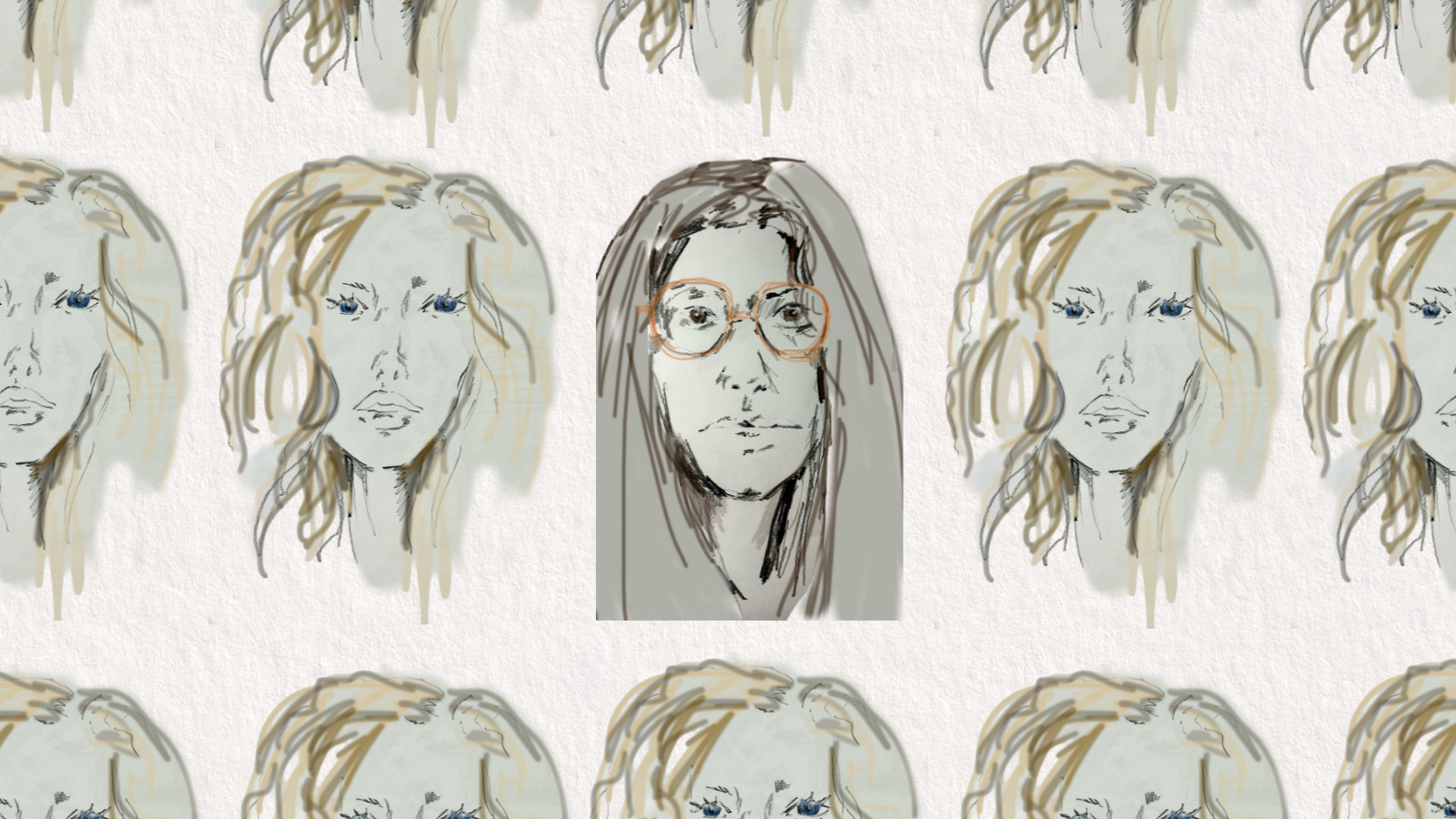
Corinne refuses to wash her hair. The water coming out of the hospital showers is poisoned — they really ought to have someone from the Environmental Control Board look into it. Instead they pin her down, scrub her hair, inject her with a sedative, then don’t bother washing the suds out. “From this time on, Corinne began to look like a mental patient, not an attractive woman who just happened to be thrown into a mental hospital,” writes Shulamith Firestone, in one of the opening vignettes of Airless Spaces (1998). It is a brutal book, now reissued into a brutal era. Unsuccessful overdose, psychosis, “stabilization.” There is no place for you within the institution. Drink yourself to sleep, red tape, incontinence. There is no place for you outside the institution. Thirteen years after Firestone’s friends found her dead in her studio apartment on East 10th Street, her work has careened into a world that is, if anything, even more ill-prepared to receive it than before.
This is partly symptomatic of Firestone’s radical feminism. In 1975, Firestone’s second-wave manifesto The Dialectic of Sex compared childbirth to “shitting a pumpkin.” Ending sexual oppression, according to Firestone, would come when humans had outsourced reproduction to mechanical wombs. The requisite research is unlikely to receive a National Science Foundation grant under the Trump regime. A hiatus of twenty-eight years separates the publication of Dialectic from the claustrophobic short stories of Airless Spaces. Firestone’s eventual isolation in her 10th Street studio, where she lived with a cat named Pussy Firestone and struggled to write through the dulling effects of medication, makes it tempting to read Airless Spaces as Firestone’s second great work of feminist theory — a cautionary tale about life in the absence of feminist revolution. In the opening story of Airless Spaces, a passenger on a sinking luxury liner runs to the basement to find a refrigerator, where she seals herself in the hope that she will survive in the air pocket. The world without the audacious transformations of Dialectic, one might think, is an airless one, in which we are left with only the vain hope of sequestering away while awaiting collective transformation.
But the politics of Airless Spaces are not the politics of feminism so much as the politics of institutional critique. In her final work Firestone investigates the psychic effects The Institution has on both the individuals in its grasp and on society at large. In this endeavor Firestone joined a tradition that stretches back to Foucault’s History of Madness (1961) and Goffman’s account of the “total institution” in Asylums (1961). Foucault and Goffman used their respective accounts of the asylum as the foundation for an investigation into institutionality itself — a way of organizing collective life around standardized, repeatable protocols whose locus is neither the individual nor the group but rather something supra-human, “the institution.” Asylums, schools, prisons, hospitals, courts: we pattern ourselves in such a way that we can slot neatly into the interlocking gears of this apparatus. Here the human condition consists in conformity, and the highest aspiration is to be (or become) normal. It is no accident that institutional critique developed in tandem with the post-WWII welfare state, whose goal of ensuring a minimal life-standard for its citizens required a capacious set of institutions for reaching into and regulating their bodies and minds. Firestone finds her late political orientation in this mid-century moment. If Airless Spaces testifies to a lost political horizon, it is not that of second-wave feminism, but of mid-century institutional critique, which was made possible by the ambitions of the welfare state whose obscure logic haunts Firestone’s micro-stories.
Firestone has come not to praise the institution, but to bury it. We are shuttled between the Harm Reduction Center and the Continuing Day Treatment Program and “Concerned Care, Inc.” (the smog of corporatization already seeps between the lines). Social existence is dispensed by these acronymic constructs, which might christen you a “well-nourished white female” on the “Current Mental Status” form, or sign you up for electroconvulsive therapy, or prescribe you Depakote. Maybe you will fight the parade of doctors and social workers and orderlies who regulate your existence, or maybe you will find yourself wanting to please them. They are not all bad. Cyndi waits a week and a half for the social worker’s visit, which will be the only time she sees another person. Leon lives alone and asks his state-provided apartment cleaner Carmela to give him a hug. Eva tells her Intensive Case Management worker that she is afraid to die. The institution is your enemy; the institution is all you have. Through its check-ups and check-ins, it holds out both the promise of recognition and the certainty of humiliation. The doctors will break you down to build you up, as surely as God brings low those He intends to raise high.
Nobody rises that high in the age of the institution. During the era of the post-WWII New Deal, there is nothing but normal left to be. In the work of John Rawls, whom intellectual historian Katrina Forrester christens the philosopher par excellence of the capitalist welfare state, we learn what principles govern what Rawls calls a “citizen,” defined as a “normal and fully cooperating member of society over a complete life.” What happens to those subjects who refuse the terms of the welfarist social contract? As Rawls puts it in Political Liberalism, if someone has “preferences and tastes” that render them “unable to cooperate normally in society…[t]he situation is then a medical or psychiatric one and to be treated accordingly.” The cooperative Rawlsian subject bears an uncanny resemblance to the successfully “adjusted” mental patient described in One Flew Over the Cuckoo’s Nest: “When he finally runs down after a pre-set number of years, the town loves him dearly and the paper prints his picture helping the Boy Scouts last year on Graveyard Cleaning Day.” Firestone was already polemicizing against the psychoanalytic goal of “adjustment” in The Dialectic of Sex, proposing that there is something deeply wrong about the project of adjusting to racist or sexist social orders that truncate the potential of human life. Her later work expands the critique of “adjustment” into a detailed anatomization of how, exactly, the nonconforming psyche is brought to a state of normalcy, and the costs that this process imposes. Writing on Airless Spaces, Eileen Myles declares its relevance: “all of us are vanishing in a century of institutions that take and take until everyone has gone away and there’s no one left to shut the door.”
But Myles’ “century of institutions” is doubtless the twentieth, as we now see regulatory agencies disbanded, public broadcasting cut, universities under attack, the boards of museums and arts centers purged, and so on. In Airless Spaces, one of Firestone’s newly released patients finds that her stomach grumbles at the scheduled hospital mealtime at 5pm — but wasn’t it a good thing that for a few months, someone was feeding her? Bettina’s high dose of Haldol keeps her from falling asleep, and when sleep at last comes, she’s woken up early in the morning for routine blood draws — but isn’t it preferable for someone to monitor her endocrine levels? As Eve Sedgwick put it, “I’m a lot less worried about being pathologized by my therapist than about my vanishing mental health coverage.” The politics of Airless Spaces would have had a retro edge even at the time of the book’s publication — but today we positively mourn for the monster she describes. I grew up in Washington, D.C., where Reagan-era cuts turned the mentally ill onto the streets where they remained. Walking past the tent cities near Union Station recently was enough to convince me that the anti-psychiatry of Thomas Szasz’s The Myth of Mental Illness (1961) has its home in a better world: one capable of recognizing mental suffering as a public problem in the first place.
In Airless Spaces Karen’s 97-year-old grandmother tries to kill herself with sleeping pills after her husband dies, but winds up getting her stomach pumped before being institutionalized, where a guard routinely shouts at her to eat. “Don’t ever end up in a place like this,” she says to her granddaughter. Ellin lets her brother manage the apartment building she owns while she is in the mental hospital, and her brother then sues for ownership, claiming that Ellin cannot manage it. Ellin hires a lawyer but loses control of the building and is then evicted as a tenant. Firestone shows us how the institutions set up for the purpose of caring tend to dominate the people they purport to nurse back to health. These injustices matter, even in a political context in which the denial of any care whatsoever is also a pressing problem. The welfare state was bad, its obliteration worse.
And the cruelties documented in Airless Spaces retain their force. Airless Spaces is at its best and most quietly devastating when it shows us ‘normal’ people and the effort it takes them to perform their normalcy. The wisdom in these pages does not age out of relevance. In the story “The Haitian Diplomat,” from Firestone’s “Losers” section of the book, a woman named Sandra strikes up a conversation with the young cadet sitting next to her on an airplane. Sandra is painfully self-conscious “of her own fifty-two years, but thought she might pass as attractive to him due to her very straight, well-fitted suit showing off her figure, which was, however, a bit too ‘mature.’” She hopes that he will ask for her number, but he doesn’t, so she “decided to put a good face on it” and shakes his hand at the end of the flight and says, “Maybe we’ll meet again sometime, you never know.” In just three pages Firestone conjures the slip from hopeful to pathetic. There is no hospitalization in the Losers section of the book, and yet Firestone intimates the madding desperation and humiliation that can attend even the most mundane social interactions. In Firestone’s literary and theoretical imagination there is no escape from the perpetual compulsion to render oneself functional, stable, safe.
Firestone’s fundamental battle is with the grip which normalcy and conformity have on every human life. And, even as the institutions shrink, hasn’t this grip tightened? Isn’t a particular image of normalcy and conformity precisely what our current regime demands? We are now seeing how, as more Americans proclaim their own ‘normality’ and hence superiority (as straight, as US-born, as white), more people must be cast as ‘deviants’ in turn. The public effort to separate the ‘normal’ from the ‘deviant’ then becomes internalized within each denizen of this country, as the battle to blend in and perform and cope. Airless Spaces turns its cooly diagnostic gaze back on the apparatus of diagnosis itself. In the process it shows us the dysfunctionality of a society in which functioning has become the highest aspiration.