
1 Single Helix
Three months into 2026, two scandals roil whatever is now meant by the MAGA coalition. Both begin with mysterious deaths: Charlie Kirk’s and Jeffrey Epstein’s.
In the nearly six months since Kirk’s murder at Utah Valley University on September 10th a schism has cleaved apart the most online quadrants of MAGA. The two entwined factors driving that ongoing rupture are 1) the recently-concluded rush to fill the literal and abstract vacuum left by Kirk’s leadership of Turning Point USA; and 2) Candace Owens’ conspiracy mongerings about who was really behind Kirk’s killing. Owens’ ceaseless vitriol is a loudspeaker for pre-existing tensions within the TPUSA umbrella. She offers a window into their netherworld.
As soon as the alleged shooter, Tyler James Robinson, was apprehended on September 12th, Owens (unencumbered by evidence) has insisted that Robinson was a cat’s paw — an Oswaldian patsy — for Israeli-linked foreign actors and donors. Owens claims that shortly prior to his death, Kirk privately told her that he was already planning a public break from his pro-Israel posture, and that the Israeli government had gotten wind of his reversal. In Owens’ telling, Israel — either directly or through one of its agents of influence — snuffed Kirk out before he could take this position public, thereby allowing the Israelis to solidify the pro-Israel voices in TPUSA — ideally in the form of Kirk’s widow Erika or another running dog, non-playable character, or plain old stooge. And lo and behold, Kirk’s widow was “unanimously elected CEO and Chair” of TPUSA according to the organization’s own language. (It’s worth noting that there is actually no evidence of Erika taking clear pro-Israeli stances.)
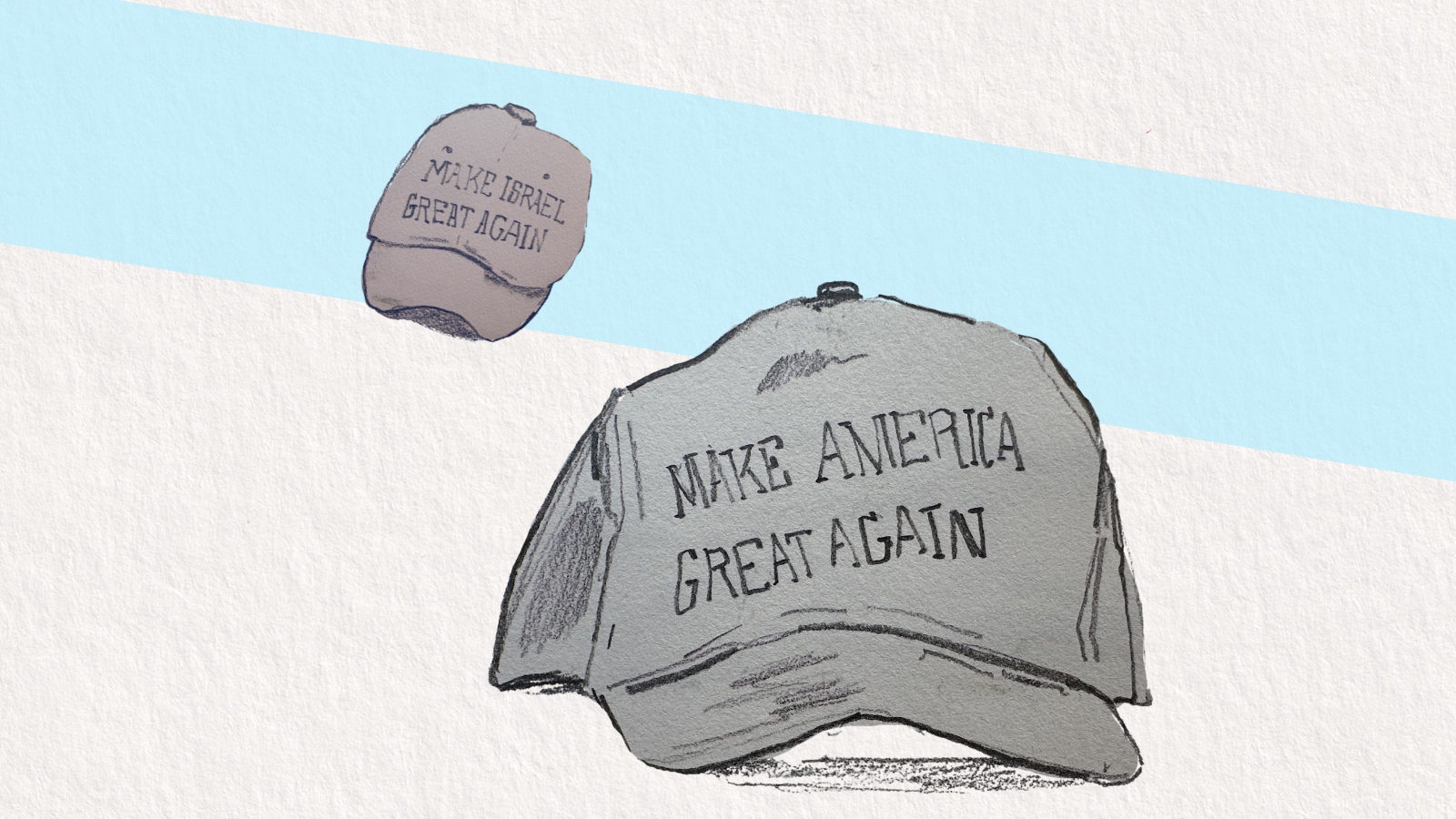
Owens’ discourse is hyperbolic (which can be useful for outsiders) but its sentiment is not out of step with important sub-sections of the New Online Right. It reflects a discrete and growing share of a movement that’s best understood as fellow travelling with greater MAGA. She speaks for a world of podcasts and YouTube streams, of dank memes and TikToks, of message boards and even the occasional conference in the real world. And it’s a world of young men who sometimes even vote. The keystone figures of this broadly, if internally heterogenous universe would include media personalities and pundits (Tucker Carlson, Chris Rufo, Josh Hammer, Ben Shapiro, Mark Levin, Steven Crowder, and Nick Fuentes), elected officials (JD Vance, Marjorie Taylor Greene, Lauren Boebert, and Ted Cruz), and foundation leaders (Kevin Robertson and Yoram Hazony).
This New Right ecosystem is not monolithic, and the figures listed above are very different people who represent distinct ideological moorings. What follows, then, is a map plotting tendencies, pressures, and points of drift on the far right rather than fixed ideological commitments.
The central issue which divides these leaders from one another is Israel. Some in this movement, like Cruz, Rufo, Boebert, and Hammer, have retained a residual embrace of Israel and whatever they mean by “Zionism” out of a habitual familiarity with the neoconservative Reagan/Bush (41 and 43) GOP grammar in which they came up. For them, support for Israel is an inherited reflex: a civilizational shibboleth retained from an earlier conservative dispensation (of the sort explicitly defended in Hammer’s Israel and Civilization) rather than freshly adjudicated on its own terms. Others, like Hazony and Shapiro, are forthrightly Zionist, even as they use their media influence to defend Israel more in geopolitical — and occasionally even civilizational — terms, as opposed to theological ones. Then there’s the camp taking more of a wait-and-see approach to Israel. This is where we find Vance, Crowder, and Robertson, all of whom, like Cruz, emerged within a lingering (and reflexively) pro-Israeli American paradigm but seem uncannily alert to the changing discursive winds in their coalition. As such, they have adopted a more equivocal position: eschewing the pro-Israeli “loyalty tests” of old in favor of the realpolitik of conditional support. It is, in effect, a politics of delay and deniability.
And then, of course, there is the biggest market share of the New Right. Number one with a bullet is the faction explicitly hostile to Israeli interests. For them, Israel ceases to function even as a flawed ally or strategic inconvenience and instead appears as a synecdoche for foreign domination, elite betrayal, and parasitic influence: a condensation point for older Anti-Semitic imaginaries now laundered through the language of sovereignty and non-intervention. This group includes Owens, Carlson, Taylor Greene, and Fuentes. Carlson’s age distinguishes him in this group. He, too, emerged within the Reagan/Bush paradigm, but has undergone a neck-snapping volte face.
Before his death, Kirk straddled a couple of these subgroups, and through his strategic leadership, TPUSA was able to serve as a de facto ombudsman for all of them. His public persona was closest to that of the Cruz’s, Rufo’s, Boebert’s, and Hammer’s: committed to supporting Israel as a beacon of faith and tradition in a world of decadent and depraved secularism. And yet Israel represented, for him, a particular kind of faith: i.e., not the impermissibly fundamentalist variety driving jihadist extremism. Israel, in other words, was for Kirk a geopolitical and geocultural Goldilocks — not too divergent from the role Russia or Hungary play in other versions of the right-wing imaginary: as emblems of Judeo-Christian Western Civilization. And yet, whereas generations before William F. Buckley had advised in National Review editorials that the GOP throw out the Birchers, Kirk didn’t banish the anti-Israeli curious from the TPUSA orbit. Kirk’s binding force died with him and the internecine struggles formerly kept under wraps manifested with haste.
These burbling factions, though, will not be confined to the internet for long. They are coming for MAGA as an electoral apparatus as well. Vance, the for-now heir apparent — assuming Trump lives to 2028 and does not mount a third run — will need to maximize support from this disaggregated, fractious, and low-propensity movement, and so will GOP candidates up and down the ballot in 2026 and beyond. This split over Israel, in other words, will have both electoral and administrative stakes.
With Washington and Jerusalem openly coordinating “major combat operations” against Iran, whether or not Israel is in fact America’s strongest ally is a question that will decide the future of the “America First” movement. MAGA’s internal argument is no longer about loyalty tests or donor etiquette; it is about whether the coalition’s defining promise — no new quagmires in and over what Trump once called “blood-stained sand” — can survive increasingly total executive power and what Trump chooses to do with it. This question exploded onto the national stage after Trump’s decision to strike Iran and kill Khamenei. Despite Trump’s hand-waving and the strange leaks from inside the administration about pre-emptive strikes for fear of Iranian retaliation to Israeli aggression, the MAGA base sees Trump’s actions as decidedly pro-war and pro-Israel. For them, those two monikers are synonymous.
This, then, is the first of two crises ricocheting within the MAGA and the New Right movements at the start of Trump’s second year in this term.
The other, of course, is the ongoing fallout from the Epstein saga. In the 2024 election, Trump and his surrogates attempted to placate the Q-curious wing of his base — the electorate motivated with almost single-issue zeal by the putative scourge of pedophilia — by promising to release the Epstein Files in their entirety. Then after taking office early this year, the administration slow walked their release prompting a growing share of the MAGA base to voice disenchantment. Attentive to this pressure, House Republicans passed legislation compelling the files’ declassification and release. The administration resisted even after Congress, under activist pressure, converted campaign rhetoric into the seemingly binding form of the bipartisan Epstein Files Transparency Act (H.R. 4405), a measure that passed by a vote of 427 to 1–the latter being Clay Higgins (R-LA). The documents released as of this writing have been incomplete and redacted with self-parodic abandon.
Since then the list of high-profile GOP officials breaking publicly from the administration on this issue has grown to include Lauren Boebert, Thomas Massie, and Marjorie Taylor Greene among others. This caucus of bomb-throwers (Boebert and Greene) and heterodox stalwarts (Massie) have directed their ire, too, at Speaker Mike Johnson, whom they cast as a water carrier for Trump’s Epstein-related evils. Greene, who is retiring from office due — in her telling — largely to this issue, has gone as far as to insist that the Epstein scandal has riven apart two previously conjoined factions: MAGA, by which she means Trumpworld and Trump’s stooges like Johnson, from “America First,” with which she aligns herself, and which she casts as a nationalist movement not beholden to one man.
Epstein-gate, like the fallout over Israel that burst into the open following Kirk’s death, has maintained an enduring hold over the right-wing imagination. Where January 6th, the perfect Ukraine call, Helsinki, Charlottesville, and any number of other scandals have disappeared into the collective right-wing memory hole, Kirk and Epstein don’t seem to be going away.
And it is no mystery why these two crises have such similar staying power: they are versions of the same story. They reflect and are driven by a shared anxiety on the New Right, by which I mean the total spectrum encompassing Trumpian MAGA and Greenian America First, National Conservatism and whatever is still meant by the Alt Right, Fuentesian Groyperism and Kirkian Turning Pointism. For all of these groups, these two scandals kindle an anxiety that, while not only about Anti-Semitism, is related to Anti-Semitism. As Arendt argued in her analysis of the modern permutation of that phenomenon, Anti-Semitism-related panics are an expression of a uniquely modern political pathologies generated by mass society’s need to personify abstract enemies. Arendt’s diagnosis is consonant with the New Right’s fixation on hidden coordination and demographic threat.
It was disorienting watching the right transform Kirk’s death into a public brawl about Anti-Semitism, and it is no less strange watching them do the same about the Epstein case. At this late date in that bloodcurdling scandal, the very name “Epstein” is used on the far right as a synonym for “Jew.” Indeed the very name “Epstein” functions in accordance with what Adorno and Horkheimer, following Arendt, took to be the central mechanism of modern Anti-Semitism: the displacement of diffuse social anxiety onto a figure at once concrete enough to be named and elastic enough to absorb limitless projection. Thus “Epstein” assumes its place in the genealogy stretching back to “Rothschild,” all the way up to “Bankman-Fried.” As Sander Gilman has shown, modern Anti-Semitic narratives repeatedly organize themselves around such proper names, which come to stand in for fantasies of hidden power, moral contagion, and systemic corruption. The cultural and political life of “Epstein,” in fact, is not so different from that of “Bankman-Fried” either, inasmuch as the mysteriously-departed ephebophile was himself—as nearly every official report on his death and life insists, a “financier.” Which is on its own analogous list of nouns that function as “Jew” stand-ins.
The same reports that centralize Epstein’s work are as likely to foreground his associates: figures like Larry Summers, Alan Dershowitz, and Les Wexner. What’s interesting about these figures’ compulsory and ritual inclusion in reporting is that — as compared with Bill Clinton, the Andrew formerly known as Prince, and, well, Donald Trump — they’re fully non-household names. The manifestly Semitic phonemes “Summers,” “Wexner,” and especially “Dershowitz” function as a Hebraic chorus. If this reading risks going for broke on hypotheses of overdetermination, it does so deliberately: because excess, repetition, and fixation are not analytical errors in this discourse, but its most reliable diagnostic features. And likewise, to note this symbolic excess is not to deny Epstein’s crimes or the reality of his victims’ suffering; it is to observe how that suffering is conscripted into a much broader and older fantasy structure.
2 (W)holes
It is not novel to say that the turn against Israel on the New Right is driven by Anti-Semitism. On the harder, Groyperian fringes, that fact is openly proclaimed. They wear their prejudices with refreshing and chilling pride (one longs for the days of shameable hypocrites). And it is likewise not novel to say that a certain hyperfixation on Epstein is animated by a lurid attention to secret Jewish superpowers manipulating us through politics, culture, and media.
The same is not true of the suggestion that the two ongoing schisms on the New Right spring from the same fundamental anxiety. It is often assumed that this anxiety is Anti-Semitism pure and simple. But there is something else, something more particular, stoking the Anti-Semitism in this instance. For the New Right, Jewishness — as symbolized in and by Israel and Epstein alike — is the embodiment of a threat to the facile fantasy of America as a biologically coherent nation.
This operates at at least two registers. The first is the destabilizing role played by Jewishness in the myth of whiteness itself, and therefore, in the self-conception of any nationalism engaged with whiteness. It is true that white nationalisms can find — and have found — use for Jewishness. This was the case in the United States after World War II, when Jewish victims seemed to prove the veracity of American exceptionalism. In Jews, midcentury America found evidence of its own virtue, altruism, and openness: flesh-and-blood proof that when we intervene in foreign wars, it is in order to export our own principles of liberty and democracy. It was a win-win: in creating the conditions for Jewish flourishing, white America found proof of its most self-aggrandizing narratives. But, for some Americans anyway, that never meant absorbing Jews. For them, the Jews did not, as the scholar Karen Brodkin puts it, become white.
But still, there always existed a tension between Jewishness and whiteness in the American racial unconscious. Jewishness can compliment whiteness for the same reason that it threatens it: because Jews can pass. Jewishness proves that the category of whiteness is at least porous and perhaps farcical.
But there’s another way in which Jewishness poses a problem to contemporary American whiteness as the latter is conceived by the New Right. This one has to do with the way white nationalists consider Jewishness as a demographic menace. In this telling, the Jews is a parasitic influence that enervates and pollutes white reproduction. Think of how often George Soros’ name is talismanically invoked in chat-groups obsessed with the Great Replacement theory.
And this anxiety is why the New Right contrasts its own isolationism with “neoconservatism,” a movement peopled by evil semites like “Wolfowitz,” “Podhoretz,” “Abrams,” “Perle,” and “Feith.” In other words, “neoconservatism” as a proxy for Jewishness is invoked as a threat to the blood and treasure of the real America in its — that is, in neoconservatism’s — wanton and reckless adventurism, often if not always in support of Israel. Here too Jewishness functions once again as a toxic impediment to the production and maintenance of real American life and bodies.
The Venezuelan episode has now supplied the stress test. The U.S. capture and removal of Maduro produced remarkably uneven outrage among the same voices who treat Middle Eastern intervention as a betrayal of the nation’s safety and future. By contrast, the opening salvos of the Iran campaign have immediately reactivated the familiar fascistic circuitry: blood and treasure, betrayal by the neocons, and the insinuation that American force is being expended for Israeli interests. This asymmetrical response to the operations in Caracas and Tehran is diagnostic in and of itself. Foreign entanglement — that ur-sin — is forgivable when it is not sutured to the Israeli signifier.
The post-Kirkian schism with respect to Israel runs along this threat matrix: casting the Jewish state as yet another Jewish-led quagmire that will sap American gold and blood. (Here we’ll recall Elon Musk replying, with characteristically tortured syntax, “[y]ou have said the actual truth,” to a post alleging that Jewish communities promote “hatred against whites.”) The same dynamic is active though less explicitly invoked in the Epstein panic. The late “financier” simply assumes the place of “Soros” or “Israel” as a Jewish figure of parasitic enervation to the commonwealth, the body politic: a hole in the American whole, the site of so much disappeared vitality. And to be clear: the real Jeffrey Epstein — and his friends — did ruin lives. But that is not why these particular people care about him. My intention here is to draw attention to the way that, in the New Right imaginary, “Epstein” assumes fetishistic, and therefore necessarily hyperbolic proportion. There is no reason to think that this fixation is animated by human feeling, a virtue absent in every other instance of MAGA-obsession.
All of which brings us back to the New Right taxonomy. The faction represented by Carlson, Owens, and Fuentes is already the fastest-growing sector in and around the GOP. Lacking any principled investment in either Israel, “Zionism,” or Jewishness, the more cautious and ambivalent constellation — Vance, Crowder, Kelly, Cruz, and Robertson — are most likely to adopt rhetorics that pledge allegiance to the Carlson wing while maintaining deniability. (Vance’s pilot launch of the term “legacy American” signals a downpayment on this effort.) In other words, once this group recognizes that there remains no constituency in the greater Right for the tired pantomime of “standing” with Israel, they will quickly jettison its political baggage.
This breakdown leaves, potentially alone, figures like Crowder, Rufo, and especially Hazony, Levin, and Shapiro: unique within the New Right for having staked an entire civilizational paradigm to Israeli power. While Crowder and Rufo have displayed nothing if not chameleonic and transactional ideological affinities over their careers, the same cannot be said of Hazony, Levin, and Shapiro. After all: they’re Jewish. Which doesn’t make them natural or inevitable proponents of Zionism (though they are). But it should alert them to the many faces of Anti-Semitism. It is unclear what ideological or aesthetic lanes will be open to them in the medium range. Their attempts to smuggle Reagan/Bush style neoconservative Zionism in under the rhetorical cover of go-for-broke domestic culture war messaging—that is, to frame the former as acceptable as a reward for the performance of the latter — are already wearing thin. They find themselves cast, tragically, as undesirable elements within their own movement.
And where does it leave the rest of the Jewish American population? How should American Jews who have never contemplated how they figure in the grimiest crevices of the American right’s American conception think about their mythical, reviled status? Alas, they, like every other American, have to know the threat they pose to this febrile ascendent faction. Its strength and imbecility swell in lockstep. We do not have the luxury of ignoring them.