
The High Art of Distance
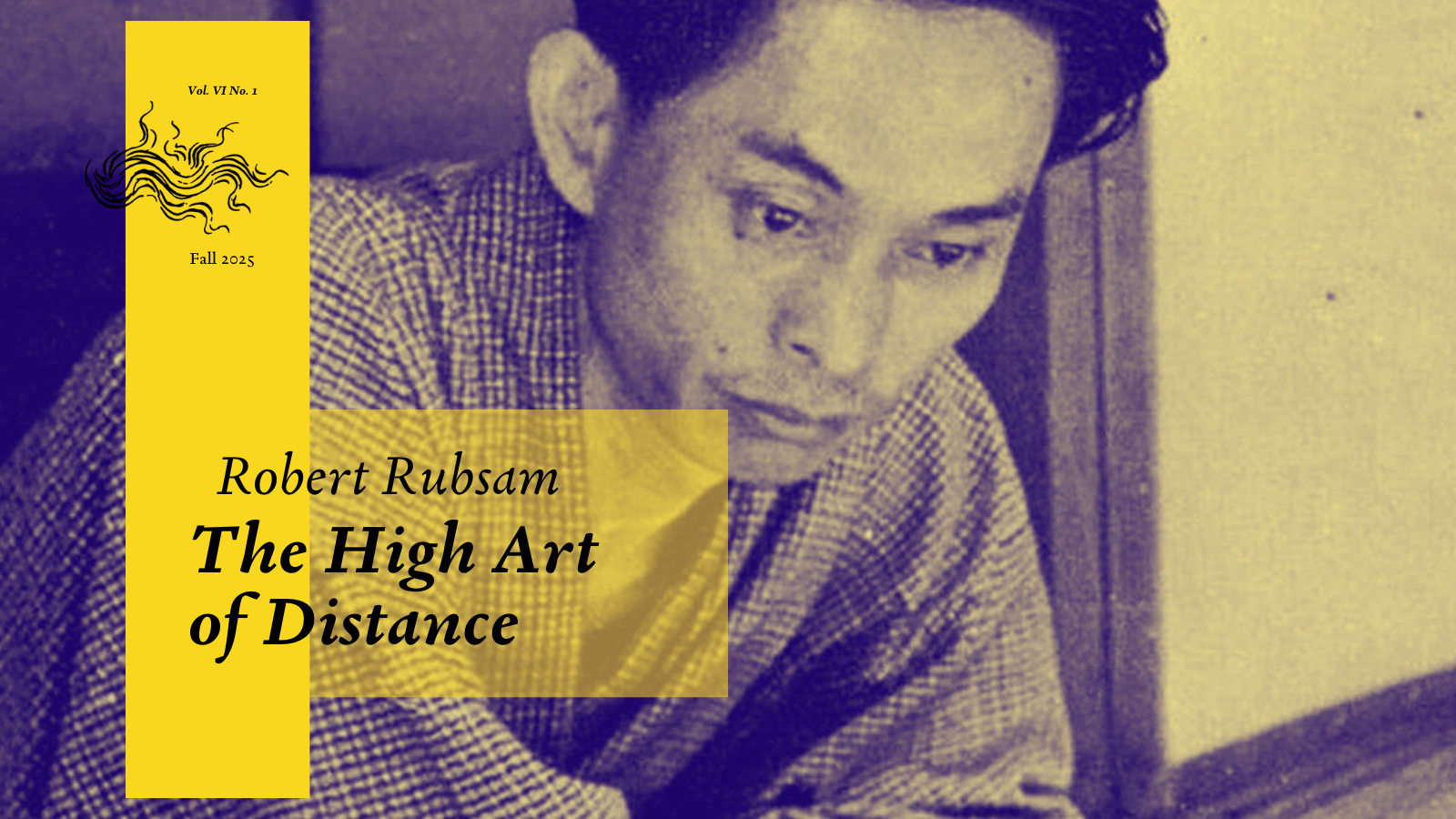 “Art, of course, lives in history,” said Elizabeth Hardwick. By which she meant that a novel emerges in its own time, and changes in its passage to our own. This — the likeness which is also an unlikeness, the unfamiliar familiarity — is the shock of reading classic literature, of literature even a generation or two removed from one’s own. We understand that a novel is essentially a historical survivor, written in one moment, picked off the shelf in another, yet we want it also to enlighten us about our own lives, of which the author necessarily knew nothing. Astoundingly, they quite often do. And yet it is in those gaps, those absences, that the real excitement lives. We should not recognize ourselves, and yet we do. We should not be moved, but we are. And then we are offended, or struck, or in some other way expelled, and the gap expands, and the past and the work and the author come to seem the distant shore they really are. We can visit, but not to stay.
I have a theory: the more we recognize in an era, a place, an artwork, the stranger its differences strike us. This is perhaps especially true for the novel, whose most familiar forms can be used to convey so much that we do not understand. “So much of a novel, after all,” observes Hardwick, “is information, necessary fact that gives a floor of understanding from which the flights of inspiration are launched.” Reading a novel from another country, another century, requires you to set a new foundation, plane a new floor — and to surrender yourself to the novel’s “subtle time,” that “spiritual and intellectual lengthening, extending like a dream in which much is surrendered and slowly transformed.” Yet for even the most sympathetic reader, this process is never complete. Your surrender becomes a kind of suspension, slack or tense, between your time and the novel’s, your era and the author’s, communicating down the years like a current shooting down a wire. You connect, and you don’t. You feel, you sense, you embrace, but always at a distance. There is always some gap.
Yet a reader’s life, too, has its seasons. At a certain time in your life, you encounter a work written a certain time in the author’s, and you understand, or you don’t. The work, the reader, the writer are like dancers moving across the floor; all three must make a trio for the dance to continue. Thirteen years ago I first tried to read The Savage Detectives; but this past spring I read it at a sprint. All that intertextuality, all those fractured, puffed-up perspectives: I needed a decade-plus and hundreds of other books to begin to approach them. So, too, can a writer miss his or her moment, and be recovered later. Robert Walser’s obsessive self-obscuring semi-fictions sing clearer in our deeply pessimistic age than during the course of his indigent life.
To say nothing of chance, when we are made to encounter the unexpected, and are made to change. In January 2017, I was twenty-five years old and in Melbourne, Australia. One day I was wandering north of the river when I passed a bookshop that was going out of business. I was with a friend then stationed in Okinawa and in a week I would fly to Tokyo, and so I picked up, at a deep discount, a slim Japanese novel called Snow Country.
Published in 1948, Snow Country tells the story of Shimamura, a young man from Tokyo, and his relationship with Komako, a geisha who serves a hot springs resort in the mountains. Shimamura is a cold man, ambivalent to the point of cruelty; in the first pages, he reflects that only a single forefinger remembers his lover. And yet again and again across the seasons he finds himself drawn away from his family, and back to Komako and the mountains. The novel proceeds as a series of piercing images: a woman’s complexion melting into a snowy mirror, a train window in which the reflection of an eye is superimposed off a light burning deep in the mountains. Komako will not let go of Shimamura, who, whatever his apathy, cannot raise the strength to escape. It concludes suddenly, and with great violence: Shimamura arrives at the site of a fire, turns upward, and feels the Milky Way roaring down into his body.
It was a startling book, a vision of the novel as something both shaped and shattered. By chance, it was also my first encounter with the great Japanese writer Yasunari Kawabata. A master of compressed forms and oblique endings, Kawabata helped introduce modernism to Japan, and published a number of significant novels, as well as more than a hundred and fifty short and ultra-short stories. For this he was the first Japanese writer to be awarded the Nobel Prize in Literature. From his time to mine: I have been reading him ever since.

In the early 1920s, when he was a student at Tokyo Imperial University, Kawabata lived above a hat shop in the northeastern neighborhood of Asakusa. The neighborhood was then one of the liveliest and most Westernized in Tokyo, and the indifferent student preferred to wander the modern quarter, taking in the revues, going to the movies, and soaking in the public baths. He seemed determined to engage in all that was new and exciting, and at the expense of his studies.
Along with much of Tokyo and Yokohama, Asakusa was leveled in the Kanto earthquake in 1923. Viewing the ruins, the novelist Jun’ichiro Tanizaki reveled in the possibilities available for reconstruction in the Western style. “How marvelous!” he wrote. “Tokyo will become a decent place now!” Kawabata’s building withstood the shaking, and he spent the following days wandering the wreckage, a jug of water and lunch in his backpack, writing down his observations.
In the first decades of the twentieth century, Japanese literature felt like a similarly cleared space. The autobiographical form known as the “I-Novel” was in decline, and a battle was being waged between the Marxist writers of proletarian literature and the modernists inspired by translations of Valery, Marinetti, and Durrell. Eminent writers such as Tanizaki and Ryunosuke Akutagawa argued in print about the future of literature. Would it be with Akutagawa’s “pure” fictions, “close to poems in prose”? Or with Tanizaki’s plotted works, “complicated things embellished with maximum intricacy”? Were the answers to be found in the Japanese and Chinese classics, or in Tanizaki’s occidental fixations?
Kawabata and his cohort found themselves suspended between these positions. In 1924, he co-founded the literary journal Bungei Jidai with Yokomitsu Riichi, a fellow writer and the founder of the Shinkankaku-ha, the New Sensationalist School of writing. Heavily influenced by European modernism, the Sensationalists emphasized the significance of form over content, artefacts of detached observation, and the personification of objects and the natural world. Their stories are full of fragmented narratives, found documents, and streams of consciousness. “We have become quite weary with literature that is as unchanging as the sun that comes up from the east today exactly as it did yesterday,” Kawabata wrote. “Our eyes burn with desire to know the unknown.”
Though his English was middling, Kawabata attempted to read Joyce and Woolf, and his earliest stories were in a distinctly modernist vein, employing fragmented forms. “A Saw and Childbirth,” first published in 1924, narrates a dream which begins in Italy, moves to the narrator’s hometown, finds he has to urinate, and engages in battle with a woman holding a saw. Kawabata folds the act of interpretation into the narrating, asking again and again what is happening, and what it means. In the final lines, he lies in bed, reflecting (in J. Martin Holman’s translation): “Somewhere would she bear someone’s child?”
“The Dancing Girl of Izu,” published in 1926, tells the story of a walking trip that Kawabata took across the Izu peninsula in 1918. When the narrative begins, the narrator is twenty years old, and has been on the road for several days. While climbing the Amagi pass, he reunites with a group of itinerant musicians who make their living performing at hot spring inns. He has already seen them twice before, and found his eye drawn by a young girl carrying a drum whom he believes to be about seventeen. The boy falls in with the group, traveling down the mountain and into Yugano. He tries speaking with the shy girl, and even dreams of inviting her to his room. Yet when he glimpses her coming out of the bath, he realizes that she is much younger than her dress had implied, and he is relieved. “I felt pure water flowing through my heart,” he reflects. His affections can remain unrequited; he will not have to allow another into his life.
Such distance came easily to Kawabata. “For me,” he wrote in 1934, “love, more than anything else, is my lifeline.” And love for him was a history of loss. Born in Osaka in 1898, he was an orphan by the age of three, and by 1914 had lost his grandmother, his sister, and the blind grandfather who raised him. In 1922, in a story of the same name, he reflects on being christened “The Master of Funerals.” His family life is retained as a series of fragments, each memory tied with a particular death. His parents exist as photographs on the family altar. He can only recall his sister as she appeared on the day of their grandmother’s funeral, carried on a relative’s back in white mourning clothes. The young man is so composed that he finds himself invited to the funerals of strangers. Yet his decorous behavior was never feigned, he writes. “Rather, it was a manifestation of the capacity for sadness I had within myself.”
His first love was for a male high school student, and in the early 1920s he proposed to a young woman who broke off their engagement. Even his most passionate male characters tend to keep their distance from life: they recognize emotions, but do not seem to feel them. Shimamura’s love draws him back to Komako, yet his apathetic treatment enrages her. In the novel A Thousand Cranes in 1952, an orphaned man named Kikuji drifts between various women, including his late father’s mistress and her young daughter, with a nearly existential level of indifference, a ghost in his own life. Even Kawabata’s happiest characters seem unwilling to act on their intuitions or feelings; when old Shingo hears a distant rumbling, in The Sound of the Mountain, he senses death. Yet this does not alter his conduct, and he proceeds through his family’s many crises without acknowledging it. These men keep everything inside.
As an editor at Bungei Jidai, Kawabata helped to shape and to promote New Sensationalism and its tenets. Yet his own early work only lightly resembles that of his peers. There is a directness to the writing which heightens every elision. Rather than circling each absence, he lets them stand. Other than his interesting but unsuccessful modernist novel The Scarlet Gang of Asakusa, Kawabata incorporates these fragments directly into the form of his stories, implicitly presenting them as fissures within the psyche of his characters, rather than overtly in the jagged structure of the text.
“Dancing Girl” is built around precisely such withholding. We wait until the story is almost over to learn that the narrator has gone walking to overcome the “stifling melancholy” of orphanhood. Early on, the male musician reveals that his wife has lost two children, one by miscarriage, another born prematurely. Only some pages later are we told that the premature baby in fact died within the last couple of months, while the performers were still on the road. As they head south to Shimoda to commemorate the forty-ninth day since the baby’s death, they talk freely, and without sentiment. “They said the baby was almost as transparent as water at birth, and it did not even have the strength to cry.” Like the death of the narrator’s parents, this tragedy rests always beneath the surface of the story, evoked through their conduct. His love for the dancing girl is not consummated, or even acknowledged. She dotes on him, but when the girl sees him off at the ferry, she refuses even to speak. When the boat sets off, he begins to sob, “a sweet, pleasant feeling,” as though he might drain away, and “nothing would remain.”
“Dancing Girl” and subsequent publications earned Kawabata substantial acclaim, and in the 1930s he moved from the avant-garde to the mainstream. He judged the inaugural editions of the Akutagawa Prize, and in 1934 he was appointed to the Bungei Kondan Kai, the Literary Discussion Group assembled by a former head of the Public Security Division of the Home Ministry. This was a period of increasing control within the arts: the literary fervor of the 1920s had given way to the increasingly militaristic and authoritarian 1930s, and many of his former rivals in the proletarian literary movement were jailed, tortured, and forced to make tenkō, a public rejection of their Marxist principles.
Given his frequent statements on behalf of artistic independence, Kawabata’s cooperation with an organ of censorship and control might seem awkward. He published articles insisting on freedom of speech and the rejection of social norms, and when in 1935 the BKK chose not to award the significant Akutagawa Prize to the tenkō writer Shimaki Kensaku, he protested publicly. Yet he also seems to have used it to firm up his own place in the literary landscape, knocking down upstarts such as Osamu Dazai and achieving financial security. When an early version of Snow Country won that award in 1937, he used it to purchase a villa in the mountain town of Karuizawa.
Like all his novels, Snow Country was published serially, before being compiled into a revised text. Because it is such a slim, exacting novel, it would be easy to think of it as a perfectly conceived work. In the introduction to his translation, the great Edward G. Seidensticker compares it to a haiku. Yet this was never Kawabata’s method. Snow Country was originally serialized between 1935 and 1937, but he returned to it in 1939 and 1940 and added a final chapter in 1947. Kawabata once remarked that it could have been broken off at any point — a harsh, fragmented quality that could describe all of his best stories.
His long works all began as short stories, often published without promise of future installments. Tanizaki theorized the Japanese novel as a work of architecture, requiring a carefully reinforced floor plan. Kawabata rarely thought ahead, writing on deadline for whatever newspaper or magazine would ask him, and essentially all of his major works were first published in installments, a common practice for Japanese writers at the time. Yet where Tanizaki used the extended gestation to construct a sturdy foundation, Kawabata leapt sharply from installment to installment, proceeding by non-sequitur, often skipping over major events to focus on stray details: the eye in the windowpane, the play of light on the Kamakura hills, the deep black of a camellia blossom. His practice was to “sound the overtones” of that first chapter, until the full harmony emerged, or he gave up; his career is full of abandoned works. They often end on a piercing image: the roaring Milky Way, the tea bowl broken across paving stones, the boy whose sorrow drains him dry. The effect is startling, and the lack of resolution lingers.
In his best books you sense him ranging across the course of a life, fusing his biography and the currents of his time into the thing called style. All those early deaths wounded Kawabata profoundly; and for all his philandering, you sense a man who held himself at a great distance from his own life. His characters, too, reside at a calculated remove from their own circumstances. Snow Country was based on an affair Kawabata had in the mountain hot springs town of Yuzawa, and he began writing the novel there, too. If it was anything like the fictional relationship, this affair must have been disappointing for all involved. Shimamura holds himself back from Komako, preferring to observe her from a distance so that he can keep from plunging into the warmth of real passion. He describes the world, so that he will not have to reach it.
One morning, Shimamura awakes to find his lover preparing herself in his frigid room. “The white in the depths of the mirror was the snow, and floating in the middle of it were the woman’s bright red cheeks.” He remarks on the “indescribably fresh beauty in the contrast,” yet Shimamura is also reducing each element — the morning, the woman — down to their essence: blood and snow, red on white. In the process he is arranging them all within his own memory, perhaps hoping to step back from the scene and, like a man arranging flowers, to discover some harmony in it.
You see here Kawabata’s distance, but also the way he privileges intensity of focus: when his characters notice something, the story reorients towards it, following their associations across space and time. This continues to the best of his late work. In The House of the Sleeping Beauties, in 1961, a not entirely impotent man named Old Eguchi visits the title’s seaside establishment. In this place, old men spend the night beside beautiful young women who have been drugged to sleep. Night after night Eguchi returns, closely observing each girl’s skin, her hair, the feeling of her toes, how her body smells. These observations lead him to remember his past, the first lover taken away by her family, an affair with a married woman, the camellia tree in the garden of a Kyoto temple he had visited with his youngest daughter.
In his hands, this free associative movement is clean, effortless. On the first night, the smell of the girl’s breathing causes him to think of milk, which causes him to think of his grandchildren, which brings to mind two affairs from his own past: a geisha who could not stand the smell of his grandchildren, and then his own first love, from whose breast he had once drawn blood. Over only a handful of pages, Kawabata slips easily back and forth between Eguchi’s present and past, conflating the scent of the sleeping girl and the sound of the waves below with his youthful flight from his family with the girl by his side. “The facts were different, but in the course of time Eguchi’s mind had made them so.” The loneliness of the character combines with the restlessness of the style: Eguchi can never remain with anyone; like the narrative, they are always passing on.
The effect is like a cold flame, an emotion held unsustainably in check. The women’s bodies are described in steady, precise detail, and yet there is no familiarity to them: they might be statues or painted figures for all he can reach them. They exist, in an objective physical sense; but Eguchi can only access the women who exist in his own past, who become real in the course of his recollection. As in the late work of Kawabata’s protégé Yukio Mishima, something from beyond the human world is required to pierce the veil, to touch them at all. In order for Shimamura to admit any deep emotion, he must allow the Milky Way to flow into him. The novel ends with a gesture, turning away from the human story to face something abstract, an ideal as pure and as violent as a mountain river.
There is a condescending idea that Kawabata’s brevity, his aloofness, are somehow “quintessentially Japanese.” But his work stands apart from his predecessors and contemporaries. Perhaps no one makes a better contrast than Osamu Dazai. Across a short but prolific career, Dazai mined his own dissolute life in a series of confessional novels and stories. These are stories of self-styled bohemians, many of them drug addicts, most alcoholics, who alternate between states of ecstasy and debasement. “I am the sort of person,” confesses the narrator of No Longer Human, “who can forget even the name of the woman with whom he attempted suicide.” Though he was once a Marxist, by the time of his brief fame in the late 1940s Dazai could more accurately be described as a nihilist. “Philosophy?” declares a character in The Setting Sun. “Lies. Principles? Lies. Ideals? Lies. Order? Lies. Sincerity. Truth? Purity? All lies.” “There is something fundamentally cheap about such awareness of genius,” Dazai writes elsewhere in the book. “Only a madman would read a novel with deference.” In life and on the page, Dazai played the part of the brilliant clown, the man who writes his novel “clumsily, deliberately making a botch of it, just to see a smile of genuine pleasure on my friend’s face — to fall on my bottom and patter off scratching my head.”
Dazai believed that Kawabata hated his work — he was right — and believed that he had shut him out of the Akutagawa Prize in 1935. In response, he published an open letter mocking the older writer’s work. “Does keeping small birds and watching dancers perform,” he wrote, “constitute such an admirable life?” He accused Kawabata of feigning a cold, emotionless exterior, an obsession with essences and ideals rather than the brute facts of life. And Kawabata’s works do conflate people with the weather, the landscape, and the seasons. In his Nobel lecture, Kawabata finds this same quality in the poetry of a Zen monk who, in “seeing the moon, becomes the moon.” His novels are often grounded in rituals and traditional arts such as Gō, lending a refinement and a purity to human affairs. A Thousand Cranes filters its erotic tensions through the tea ceremony, imbuing each act of prostration and consumption with the significance of tradition. Even the most abject debasements take on their own cold beauty.
There is little beauty in Dazai, and no refinement. For his narrators, society’s charades mask the real and unendurable agonies of existence, a performance which we bear only out of our own ignorance. As one character writes in his suicide note: “When I pretended to be precocious, people started the rumor I was precocious. When I acted like an idler, rumor had it I was an idler. When I pretended I couldn’t write a novel, people said I couldn’t write. When I acted like a liar, they called me a liar. When I acted like a rich man, they started the rumor I was rich. When I feigned indifference, they classed me as the indifferent type. But when I inadvertently groaned because I was really in pain, they started the rumor that I was faking suffering.”
This clownish despair brought Dazai fame and success, but it was short-lived: he killed himself alongside a mistress in 1948. Yet in recent time Dazai has surged in popularity. His heightened emotionalism has found a following on TikTok, a perfect home for such piercingly direct statements as “learning is another name for vanity. It is the effort of human beings not to be human beings.” Kawabata’s work might be modern, but it is of a restrained modernity; Dazai overflows, rushing on into our own time, obsessed with the illusion of connection, the theater of confession. Kawabata’s elusive, opaque fictions cannot compete in such an exhibitionist contest.
“I am one of the Japanese who was affected least and suffered least because of the war,” wrote Kawabata in 1948. He joined several patriotic writers’ associations, and was sent to Nagano prefecture to discuss literature with farmers. He wrote for newspapers in Manchukuo, and visited Mukden with other prominent Japanese writers. Unlike his old friend Yokomitsu Richii he did not become a rabid anti-Westernist, and he did not join the Pen Brigades sent abroad to write propaganda. “I was never caught up in a surge of what is called divine possession,” he recalled, “to become a fanatical believer in or blind worshiper of Japan.” He served as an air raid warden in Kamakura; he spent the blackouts reading The Tale of Genji. After the defeat, he declared that he would live only to maintain the traditions of Japan.
The postwar period was probably the most productive of Kawabata’s entire life. In 1948 he became the fourth president of the Japanese PEN Club, and traveled to PEN congresses across the world to promote Japanese literature. He wrote frequently for newspapers, and serialized numerous novels simultaneously. In the ten years after 1945 he published a revised edition of Snow Country as well as The Master of Go, A Thousand Cranes, The Sound of the Mountain, and numerous “Palm of the Hand Stories.” These post-war works deploy a simplified, refined version of his pre-war modernism to address traditional Japanese arts in a thoroughly Westernized context. Other writers suffered under the U.S. Occupation’s Civil Censorship Detachment, which forbade, among other things, “Criticism of the Occupation Forces,” “Third World War Comments,” “Glorification of Feudal Ideals,” and “Overplaying Starvation.” But as under the military government of the 1930s and 1940s, Kawabata’s personal remove and his quiet, private subject matter largely evaded scrutiny. Even The Master of Go is largely ambivalent in its symbolic depiction of Japan’s defeat. Unlike in The Setting Sun, an aristocratic tradition simply slips away, too refined to insist on its own defense. The world had changed, and so should literature. Akutagawa’s “pure” fiction must give way to something else.
“If there is to be a ‘renaissance of literature,’” Kawabata wrote in 1935, “it will have to take place in works that are at once of pure literature and aimed at a mass audience.” He applied this theory in earnest through the 1950s and 1960s, writing great quantities of “middlebrow literature” for the highest-paying major newspapers and magazines, long novels such as Tokyo People which remain to this day untranslated. For Kawabata’s English-language admirers, this trove can seem more like a hoard, waiting for excavation. The Rainbow, an intermittently effective recitation of his core preoccupations, recently translated by Haydn Trowell, is the latest exhumation. Originally serialized in 1950–1951 in one of Japan’s largest women’s magazines, it tells the story of Mizuhara, an architect with three daughters by three women. Momoko, the eldest, and Asako, the middle child, live with him in Tokyo in the immediate aftermath of the war. Asako wants to find their missing sister, but Momoko is indifferent, caught up in a vicious romance with a teenage boy.
In works such as The Master of Go, the Japanese defeat is addressed indirectly, through a meditation on other subjects. Kawabata visited Hiroshima as a representative of PEN, and though he said that he would one day write a novel on the subject, he never did. The Rainbow is as close as he came. Five years before the novel begins Momoko was in love with Keita, a schoolboy and member of the kamikaze Special Attack unit. On their final night together, Keita made a mold of her breast from which to make a teacup to drink his last cup of sake before death. Realizing they might never see one another again, she gives herself to him, and he takes her virginity. She rejoices in the feeling, like “a flash of lightning in the overcast sky of her long love; a radiant, scorching cause of joy.” His response is immediate. “‘Ah,’ he spat out softly, turning his back to her. ‘Ah. How dull.’” He finds her pathetic, violated, and he dies in Okinawa without seeing her again. This is one of the few explicit references to imperial war-making in Kawabata’s work, in part because he remained at as much of a distance as an ambivalently pro-Imperial writer could.
From 1942 to 1944, Kawabata commemorated the outbreak of the Pacific War in the Tokyo Shimbun newspaper, publishing articles on the writings of soldiers killed in action. “I have always grieved for the Japanese with my private grief,” he wrote in 1948, “that is all.” Wartime literature portrayed Japanese soldiers as brave recruits, solid men spreading enlightened Japanese culture across the Pacific. Yet Keita is an unsentimental depiction of a Japanese soldier, caught up in fear and self-loathing, a death in search of a purpose. Late in the novel, his father reflects: “The dead escape condemnation. But it’s fine to put the blame on them.”
Kawabata’s serial plots are never terribly strong; they are propelled by thematic resonances rather than narrative drama. But The Rainbow is a particularly overextended beast. The plot is dictated by extensive coincidences, and despite being only a little over two hundred pages long, it is drawn far too thin. It is full of characters who do little but explicate their motivations, and at great length. Mizuhara is often present to deliver lectures on Japanese architecture, but does little else. Kawabata’s best work is defined by reserve, a nearly perverse unwillingness to state the obvious. Here, however, characters talk and talk, expressing everything, suggesting nothing.
Asako is a particularly failed creation, prone to sudden distressed exclamations, as if incapable of thinking even five seconds into the future. Her virginity is contrasted with Momoko’s bitter, wounded state, driven from a shattered love towards manipulative sex. This dichotomy recurs frequently in Kawabata’s work. As others have remarked, he prized beauty, “fresh” beauty, above all things, with virginity signifying the ultimate in beauty. Asako, Momoko, the sleeping beauties: all are ideal women who cannot be touched. In the autobiographical Letters to My Parents, Kawabata declares: “I always fall in love with women who are in between a child and an adult in age.” “I am all but moved to tears of gratitude that such a girl exists,” he writes, “but I could never love her.” His men keep their distance from such women, as if afraid of corrupting them.
Yet for all his devotion to the pure, Kawabata’s virgins are often his worst characters, either fading into nothingness or remaining as symbolic foils to more complex women. Asako is not only weak, but passive; where Momoko pursues a series of destructive love affairs, her sister’s one attempt at romance lands her in the hospital, before she disappears from the novel entirely. Whatever his moralizing intentions — such as his claim that A Thousand Cranes was written to illustrate “the vulgarity into which the tea ceremony has fallen” — his work becomes electric once his characters have been in some way compromised. I am thinking of Shimamura’s apathetic philandering and Komako’s stubborn love, the diverse lusts of young Kikuji and Old Eguchi. Without such stains and blemishes, Asako and her father are lifeless.
When we pick up the failed works of a major artist, we glimpse the hard limits of his or her artistic project, and with it their worldview, and the result can be disorienting. The outlook that gave us such beautiful insights also gave us a host of inconsistencies and contradictions. We might want to dismiss a disappointing work as minor, insignificant, or we might use it to demolish the writer’s perfectly constructed canon from the inside. The flaws give the lie to the concept of brilliance; if they fail here, imagine where else their work might fall short. Yet it seems to me undeniable that such faults are essential components of an artist’s worldview. Without them, we see the reflection, not the landscape. Kawabata’s intuitions are not presented piecemeal; they arrive as a total worldview. A general allergy to plot created narratives driven largely by aesthetic associations. His profound emotional distance gave him a unique vantage on how passion ravages the mind. His apoliticism made him both the beneficiary and the critic of the imperial government and its militarist mentality. And he saw that the same impulses which seek to preserve purity wish even more to destroy it. This was not all conscious, yet it is expressed again and again across his oeuvre. In the work of a truly great writer, even the flaws cohere.
So it is in The Rainbow. In the final quarter, the focus narrows in on Momoko, and Kawabata achieves passages of immense power. The eldest sister becomes pregnant, and receives an abortion which neither her father nor Keita’s seem willing to mention; even the novel describes it only as “the operation.” Too weak to return home, she stays in Kyoto with Keita’s father. Time begins to collapse, and the narration leaps from one reflection to another: her birth mother’s suicide, the death of her first lover, the arsenic pill which her adoptive mother swapped out with sugar. How much of life turns on such small actions, she wonders, how much misery do we unknowingly perpetuate? Her furious heart is empty, and like a true Kawabata protagonist, she submits herself to the will of the world, unable to act upon her fury. Yet that rage is still there, like a taut string quivering at the heart of the novel, always ready to snap.
In the final pages, she is brought to meet her youngest sister, a geisha named Wakako, in a restaurant in the northwestern neighborhood of Arashiyama. As they are walking along the Oi river, she stops before a pool and sees a small tree reflected in the water:
It was a web of fine branches, drawn clearly over the water. What kind of tree was it? Above the embankment, its intricate, delicate lines were difficult to distinguish among the surrounding foliage, yet they stood out perfectly on the surface of the river. It was as though she was staring not at a reflection but at a tree growing inside the water.
The world is clearer in reflection, as life is more vivid in art. Momoko goes off to see her sister. In the final moments she slides open a shoji screen, to hear the river’s flow.
I have been trying to read Kawabata’s works in his own time, but now I must write about him in mine.
In 2017, I took my copy of Snow Country from Melbourne to Tokyo. I read it quickly, incompletely. I remember feeling at a loss, held apart from the characters, both thrilled and disoriented by the conclusion. So over the next few weeks I found copies of A Thousand Cranes and The Master of Go, as well as books by Mishima and Endo, and I devoured them as I went. I read them in Nikko, across the mountains from the Yuzawa snow country. I read them in Kyoto, in a coffee shop in Arashiyama. And I read them in Kamakura, where, on April 16, 1972, Kawabata went to an apartment in Hayama and drew a bath. He unhooked the gas line — on purpose? by accident? — and died.
When I think back on that time, I remember being shocked by the suddenness of Kawabata’s revelations: the roaring milky way, the broken tea bowl. I was young, I was in a foreign country, I was open to everything, like a house with all the windows flung wide. I took it all in, and reflected later. Several weeks later I came to Tsuwano, in the mountains west of Hiroshima. One night, I was eating a simple sushi meal by myself when a pair of men approached me. They were English teachers and were celebrating a colleague who was changing schools. Would I like to join them?
I spent that night with perhaps twelve other teachers, and after many drinks they asked what I was reading, and I told them. They didn’t think much of Endo, Mishima was too patriotic, Kawabata far too old-fashioned. A middle-aged man from Izumo described him as a “classic” whom few people actually read. He wrote his email on a piece of paper and told me to write him. I folded the slip, put it in my pocket, and lost it on the way back to my room.
Their words stuck with me. I had spent so much time in Japan, had witnessed so much, yet what had I understood? Kawabata’s books had surprised me, sure, but had I read them properly? What had I gained from them, really? Perhaps an openness to surprise, and to shock. Near the end of my trip, I arrived at the Koya-san temple complex in the mountains south of Osaka. It had snowed heavily, and during my days there tree branches snapped and roofs rumbled. I was walking alone through the Kongobu-ji when I came upon a small side room, its paneled walls bright with gold leaf. All my trip I had come across similar such artworks, and marveled at how the gilding set off the painted landscapes, abstract fields leafed across deeply detailed scenes. Yet I had not seen them. For as I stood there I saw, I really saw, that the screens formed a long landscape of mountains and waves, with a flock of cranes soaring across it all. I looked closer, and saw cloud patterns dimpling the edges of the gold leaf, and all at once I realized that the cranes had been scattered by the winds, separated in the field of clouds, calling to one another but lost, and lost forever, in this field of great beauty, and it was as if the light were blinding me, as if my body was collapsing, and a great wave of beauty and sadness flooded through me, a Kawabata feeling, a feeling I have not forgotten in all the years since.
 “In the huge gathering . . . there were, according to the official estimate . . . 1,250,000 persons. So far as available records indicated last night, this was the largest crowd that has ever assembled at a single point anywhere in the world.” This
 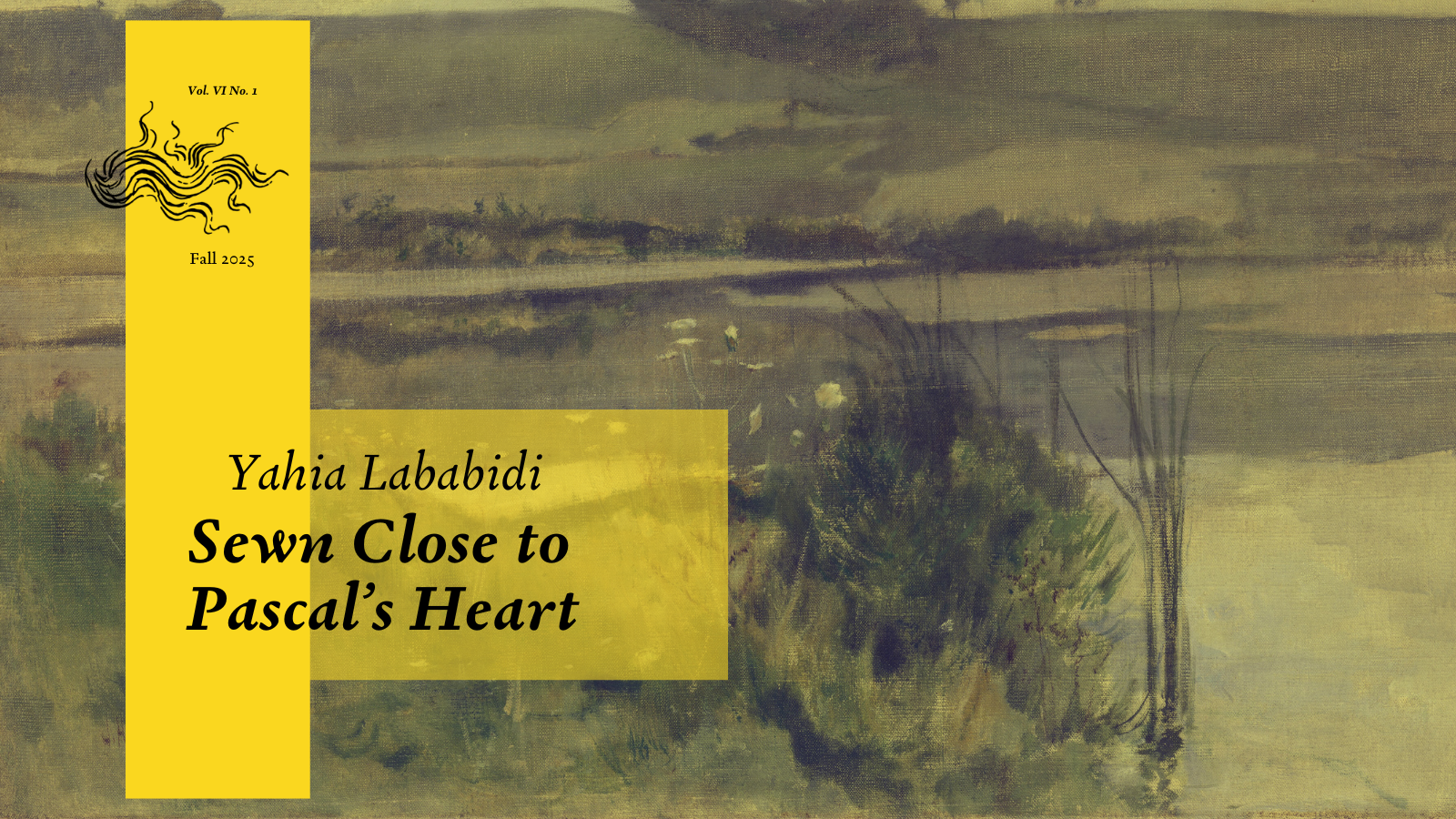 “Man is but a reed, the weakest in nature, but he is a thinking reed.” The line appears halfway through Pascal’s philosophical work,
  It was still early in the war. After four days of internet blackout — and, God knows, testing countless VPNs — I finally reached a stable enough connection to check my email. The last one was from a prestigious university in New York, where I was scheduled to begin my Ph.D. in the upcoming academic year. They had asked why I hadn’t confirmed my admission yet, warning that if I delayed any further, I might lose my spot. I responded politely that these nights I can’t sleep from the sounds of Israeli rockets landing right and left across my city, and that during the day, I’m constantly trying to make sure the many people I know across town are still alive. News that someone two oceans away was thinking about my fall plans felt like a comforting distraction. But truthfully — even if I had not been under rocket fire — the new travel restrictions against Iranian citizens would have made it impossible to attend that program anyway. I typed up a version of these sentiments, hit send, and then I stared at my phone screen, watching the VPN wheel spin, waiting for the email to leave “draft” status and finally be sent. The wait, of course, wasn’t short. As with all attempts at action during the days Tehran lost to war, it dragged on.
 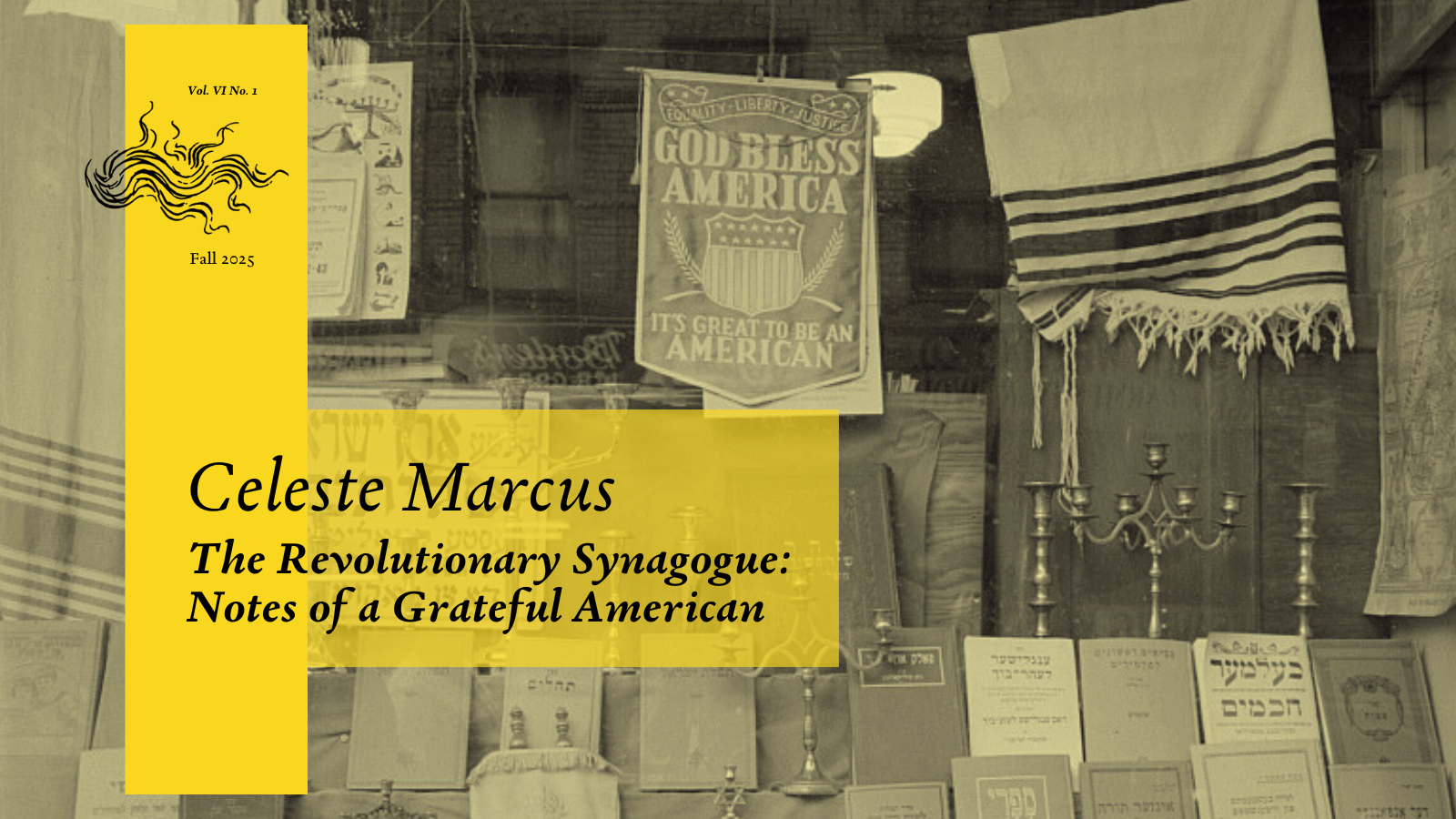 Pedro Alvares Cabral was the first human being in recorded history to have been on four continents. He set foot on each of them — Europe, Africa, America, and Asia — in a single year, 1500, which was the same year that he led the first extensive European exploration of the northeast coast of South America. He “discovered” what we know today as Brazil in April of that year, and wrote home to King Manuel I notifying him of Portugal’s brand new territory, theirs by virtue of the authority vested in him by the King and his interpretation of the divine will. Cabral sailed on from Brazil, but he left behind the seeds of what would become the first robust Jewish community on the American continent. Among Cabral’s crew was a man who went by the name João Faras. Faras was an astronomer, astrologer, physician, translator and — most importantly for our purposes — he was a member of the community of Portuguese Jews who had been forcibly converted to Christianity by the King of Portugal just a few years after the Spanish expulsion.
 A little lectionary: