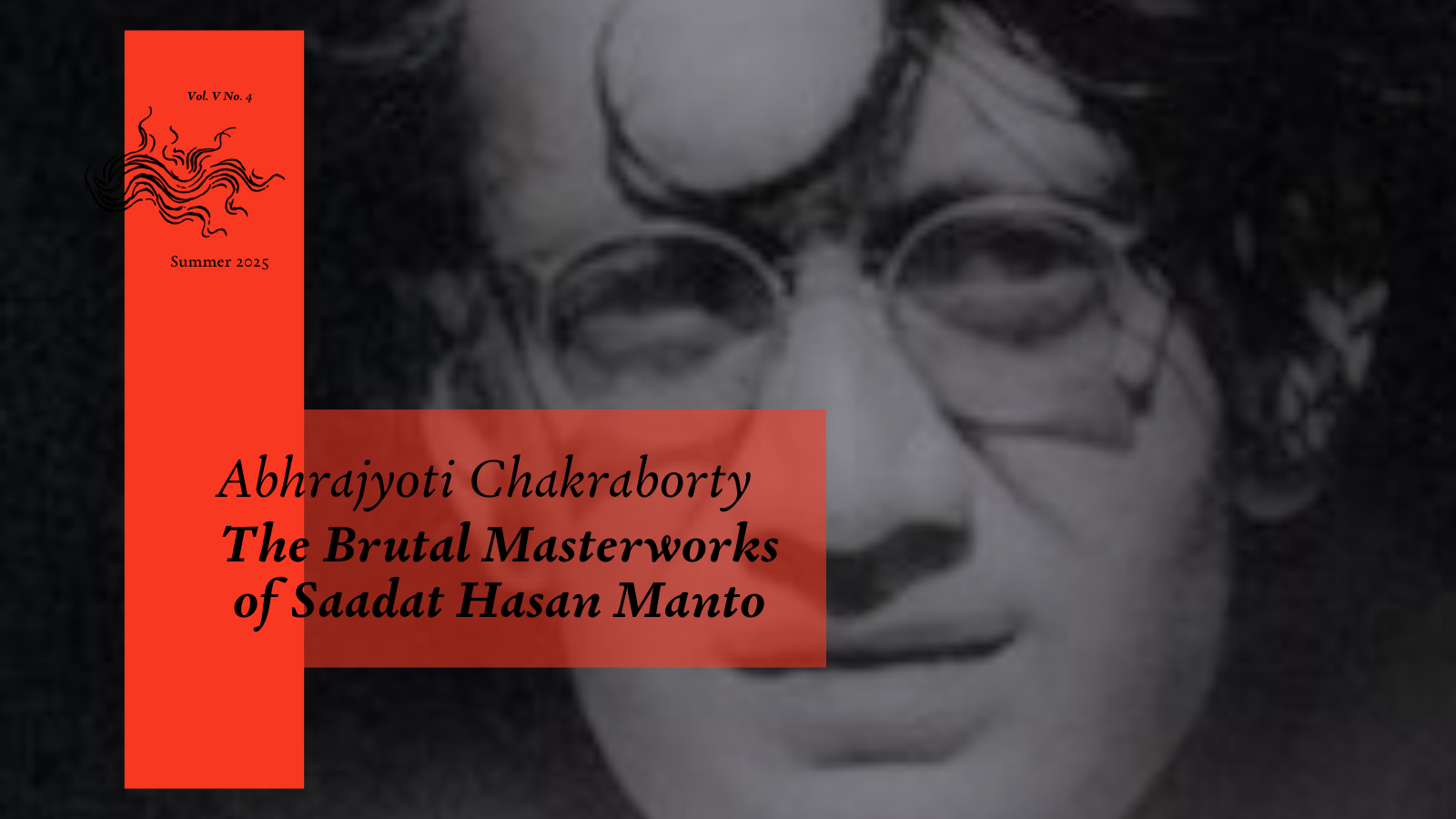
In January 1948, four months after the traumatic partition of the Indian subcontinent, the Urdu writer Saadat Hasan Manto boarded a ship to Karachi from Bombay. He was moving to Lahore, where his wife, Safia, and daughter, Nighat, had travelled the previous year to attend a wedding, but after yet another British colony was split up along sectarian lines in August, and refugees began to trickle into both sides of the border with tales of arson, murder, and rape, Safia had decided not to return. At twenty-two, Manto had briefly worked for a newspaper in colonial Lahore, and later, after his literary career took off, he often came back to defend his stories against multiple charges of obscenity filed in the city’s courts. But now Lahore was in Pakistan, a new nation that had been carved out overnight as a homeland for the region’s ethnically diverse Muslims, a country to which Manto had abruptly decided to migrate one morning in Bombay in the wake of endless riots and killings everywhere. And yet, as he wrote later, “I found it impossible to decide which of the two countries was now my homeland — India or Pakistan.”
The Brutal Masterworks of Saadat Hasan Manto