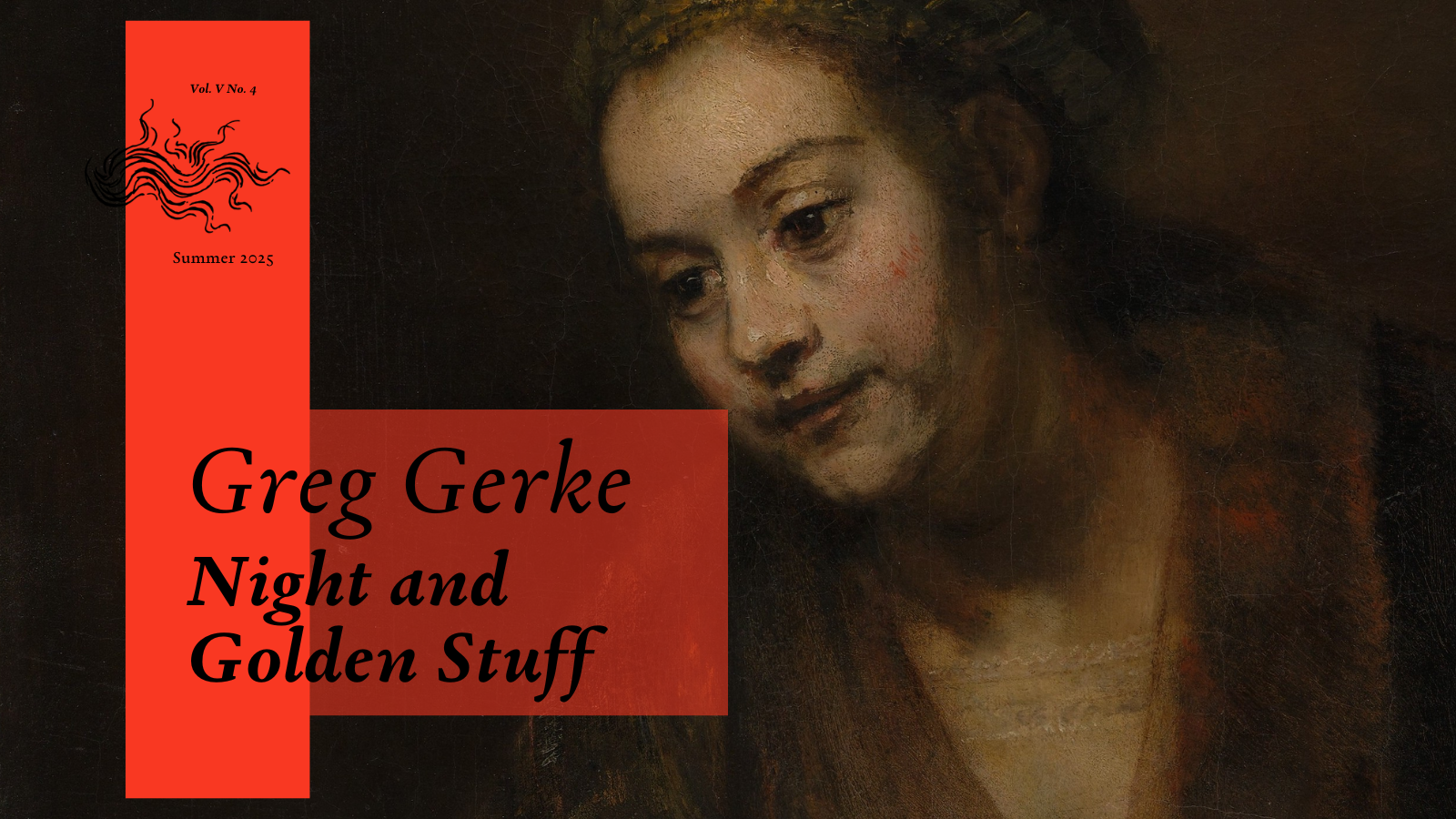
The Met on a cloudless Tuesday afternoon was not too crowded (the Vermeer room was empty for five minutes — a record, in my experience). We came to Rembrandt first. I entered his art with a helping of Malraux to guide me. He had written that Rembrandt was a brother to Dostoevsky and “one of the few biblical poets of Western Christendom, and that is why his painting, which does not illustrate his poetry but expresses it, encountered bitterer hostility than Franz Hals had to face.” His poetry “expresses” his painting — again that primal word. I hadn’t been able to make that connection even on the day I read Malraux — I had to see it myself, in person. Here were the familiar six late period paintings, ending with the vaunted Self-Portrait from 1660 and beginning with Aristotle Contemplating a Bust of Homer (The Toilet of Bathsheba is just before it) and going to Hendrickje Stoffels, then to The Standard Bearer, before the Woman with a Pink, and finally Man with a Magnifying Glass. What they all share is that burnished background chiaroscuro, so the figures — often in dour or dark garb, save Aristotle — emerge from the plane of the canvas like Ezra Pound’s words in Canto XVII:
Night and Golden Stuff