
Brief Encounters
 I have not lived among famous people. My comrades were lovely men and women rarely celebrated or even mentioned in the mass or mainstream media. But I did meet briefly with people like those described below. If they were called back from the dead, they probably wouldn’t remember the meeting, but it is still vivid to me. Think of these encounters as a circumstantial but still useful introduction to my politics, a quick glimpse in preparation for the more extended memories that come after.
(Judy, who appears several times in these sketches, is my wife and comrade of many years. Marty Peretz and Jeremy Larner are friends from Brandeis University days. Dissent is a political magazine of the democratic left that I wrote for over seven decades, from the 1950s to the 2020s; it is featured in several of the following sketches.)
Wayne Morse
He was the Republican, and later Democratic, senator from Oregon in the period immediately after World War Two. In 1947, he proved himself the most liberal Republican since Abraham Lincoln by filibustering for ten hours against the Taft–Hartley labor — actually anti-labor — law, trying to prevent the Senate from over-riding President Truman’s veto. (He failed.) I can claim no credit for Morse’s liberal heroism, but I had urged him to do exactly what he did.
I was twelve, politically obsessed and very pro-union. Sometime in the months when Taft–Hartley was being debated in the Senate, my mother took me on a trip from Johnstown, Pennsylvania, where we lived, to Washington, D.C., to visit with a high-school friend of hers, who worked in the city in some political capacity. She knew Morse and invited us to talk to the Senator on behalf of the labor movement. So we did, and I told the Senator — and he listened! — that the people of Johnstown, a strong union town in those days, wanted him to oppose the law. Or something like that. I went home very proud of myself, and until today I tell union friends that I lobbied against Taft–Hartley (which has never been repealed).
C. Wright Mills
He was a left-wing sociologist, the author of The Power Elite, a favorite academic of the New Left of the 1960s, who wrote for Dissent (until, after embracing Castro, he didn’t). He was a visiting professor at Brandeis University in 1952–1953, which was my first year there. He was given an office in a building on campus that also served as a student dormitory (it was early days at Brandeis and space was scarce). My room was right next to Mills’ office. On March 5, 1953, Mills burst into my room (I don’t think he knocked), very excited, and told me that Stalin was dead. He stayed to make sure I understood that this was important.
Isaac Deutscher
He was a self-proclaimed “non-Jewish Jew,” a renowned biographer of Trotsky, and a defender of, or apologist for, Soviet communism. I met him once, in a state of belligerence. My wife and I were living in London in 1964. I had by then written a number of articles for Dissent, one of them critical of British intellectuals who defended the Soviet repression of the Hungarian revolt in 1956. I didn’t mention Deutscher and I don’t remember what he wrote about Hungary; probably nothing good. He had appeared once in Dissent, with a too generous reading of Soviet politics, which elicited a harsh response from the editors. Dissent, which was founded and edited by my teacher and friend and comrade Irving Howe, was a magazine of the anti-communist left, which was, then and now, my own politics.
One day in the spring of 1964 we received a dinner invitation from Ralph Miliband, an English leftist, the author of Parliamentary Socialism, a sharp critique, and the father of David and Edward, future parliamentary socialists and rivals for the leadership of the Labor Party. We arrived at the designated time, and Ralph welcomed us — and then Deutscher, also a guest, lying in wait, as it were, stood up and, without any greeting, angrily told me that I should stop writing for Dissent. It was wrong to write for that magazine: “There is no such thing as an anti-communist left!” Ralph jumped in with some mollifying remark, and the rest of the evening was ruled by English politeness. I don’t remember what we talked about over dinner. I never saw Deutscher again.
Benazir Bhutto
She was twice prime minister of Pakistan, probably one of its better prime ministers, assassinated in 2007. Many years before that, in the early or middle 1970s, she was a student in a course I taught at Harvard on war and morality. She wasn’t in my discussion section; I didn’t know her. One day I was lecturing on humanitarian intervention, using as an example and defending the Indian intervention to stop the brutal repression of dissidents in East Pakistan in 1971 — an intervention that led to secession and the creation of Bangladesh. Suddenly a young woman — it was Benazir — jumped up to tell me that I was wrong; passionately, she defended the Pakistani government’s effort, as she described it, to hold the country together. I responded as best I could, without passion.
I never encountered her again; I don’t remember what grade she got in the course. But the story doesn’t end there. A classmate from those days met her in Europe during a year when she had been in political exile — she was for decades a figure of controversy in Pakistani politics — and they recalled her dramatic intervention in my class. Benazir told her, so the friend reported to me, that she now thought that the Pakistani repression was wrong. Hearsay, I know, but I repeat the report anyway.
Noam Chomsky
I debated him in a Harvard lecture hall sometime in the early 1970s. It was, I think, our only meeting, though we had some angry exchanges in the press before and after that. The subject of the debate was the politics of the Middle East — really Israel/Palestine. It was early days in the occupation of the West Bank, of which we were both critical. But Chomsky believed that the occupation revealed something essential about the state of Israel or about the Zionist project, while I thought that the ongoing occupation was politically caused and required political opposition. I was against essentialism — and a defender of Zionism.
Chomsky clearly won the debate — that is, most people in the audience were on his side, probably from the beginning, certainly at the end. It wasn’t that he was an especially good speaker, but rather that he had at his fingertips an extraordinary amount of information — or, better, endless references to sources unknown to me. Talking very fast, he quoted newspapers and magazines in six languages. I was sure that he was making up the quotes, but I had no effective response. He debated with footnotes; I had only my own opinions. It was better to argue with him in print, when I could look things up.
Tom Hayden
He was one of the early leaders of Students for a Democratic Society, not only intellectually but also on the ground — he didn’t just talk about community organizing, he went out and organized. I invited him to write an article for Dissent, and he sent in a strong piece that didn’t need much editing. That made us friends, sort of, and when he moved to Newark in the early 1960s to work on the Newark Community Organizing Project, he would visit me in Princeton (I was a brand new assistant professor) for a little R&R. And then he invited me to visit NCOP and attend one of its community meetings.
What was most important in SDS organizing was to empower “community people” and bring them into positions of leadership. Tom wanted to show off NCOP’s success: the meeting was run by someone from the city — not a left activist, not an academic. Tom sat in the back with me. But I couldn’t help noticing that many of the people at the meeting were getting a crick in their necks, looking back at him for direction. Better, I thought, to be up front and accountable.
A few years later, in late summer, 1968, I met Tom for the last time. He was on his way to Chicago, and he stopped in Cambridge (I was now at Harvard) to meet with Marty Peretz and me. He told us what he wanted to do in Chicago — provoke the police, disrupt the Democratic Party convention — and asked for our support. We said no.
Fred Shuttlesworth
He was one of the heroes of the early civil rights movement — a good man in a hard place. Birmingham was never easy in the 1960s. I knew him briefly, at the very beginning, and the story of our meeting reveals something of Shuttlesworth’s character, tough and sweet at the same time. Jeremy Larner and I came to Birmingham in April of 1960 to write about what was happening there — I for Dissent, Jeremy for someplace else (I’ve forgotten where). We had the phone number of an old leftist in Birmingham, L. D. Reddick, who had written for Dissent. He brought us to Reverend Shuttlesworth’s church. We wanted to interview Shuttlesworth; he didn’t want to be interviewed by two white kids he didn’t know. Were we supporters of the movement? Then we should speak at his church that evening — there were weekly meetings in those days that were drawing between five hundred and one thousand Birmingham blacks, young and old. We should tell his people that they had friends in the north.
It was a challenge, and it wasn’t possible to say no; we didn’t want to say no — we weren’t journalists, after all, we were political activists. But neither of us had ever spoken to a crowd like that and, obviously, we had none of the oratorical skills of black Baptist preachers such as Shuttlesworth. We spoke that night to a very full church. I have no memory of what either of us said, except that I assured the congregation of Harvard University’s solidarity with their struggle. We weren’t the only white people in the church; a couple of plainclothes cops sat in the front row, watching us. They didn’t look friendly.
As soon as we finished speaking, Shuttlesworth told us that we had to leave immediately. And then he took us to the bus station himself and put us on a bus to Atlanta. We should work for the movement in the north, he told us (which we did). His concern for our safety, I thought, was a kind of reward for speaking in his church. Only a few years later, there were many more visitors from the north, activists like the two of us, and some of them, braver than we were, stayed.
Yeshayahu Leibowitz
He was an Israeli scientist who was not known for his science but for his fierce theological/philosophical/political arguments. Immediately after the 1967 war, he warned Israel against holding the captured territories, and he repeated that warning again and again. Though he was a deeply religious man and an observant Jew, he was a secular Zionist who opposed any idea that the state of Israel had redemptive value or that the Jewish people had a religious claim to the Land of Israel. The founding of the state was emphatically not the beginning of the messianic age. Leibowitz spoke several times to the annual philosophy conferences held at the Hartman Institute in Jerusalem, which I attended regularly from the late 1980s.
I visited him once in his small Jerusalem apartment. I don’t remember the occasion or who came with me. I think that I went with Judy — the two of us and maybe a couple of the Hartman people, by invitation. We spoke about politics, not about religion, and I remember, though maybe I made it up, that we listened to him say what he said often and was famous for saying: “The meaning of Zionism is simply this: we didn’t want to be ruled by the goyim anymore.” I’ve said it too, quoting him again and again.
George McGovern
My engagement with him was indirect as well as brief. We never met, but one day early in his presidential campaign in 1972, I got a letter from him inviting me, together with Marty Peretz, to organize a policy advisory group on the Middle East — focused especially on the Israel–Palestine conflict. We agreed to do this, and we rounded up a few well-known academics who wrote about the region and the conflict (and whose political views we expected to agree with). I don’t believe the group ever met. We talked over the phone; there was perhaps one conference call; and then Marty and I wrote a draft and circulated it. The others sent in suggestions and criticisms, and we wrote another draft, which was accepted by our colleagues — and sent on to McGovern. He never responded; I doubt that he read it; it did not figure in any way in his various statements about Israel and Palestine.
Tip O’Neill
He was a Democratic congressman from a Massachusetts district that included Cambridge. (He eventually became Speaker of the House of Representatives.) During the anti-war campaigns of the 1960s, when I was co-chair of the Cambridge Neighborhood Committee on Vietnam, a couple of us from CNCV were invited to meet Tip (everyone called him that) in his Boston office.
I had recently published a piece in Dissent on Greek politics — the American connection, the right-wing generals’ coup, and so on. We walked into Tip’s office, and he began the conversation by asking me a question about the Greek generals. This obviously had nothing to do with the reason for our visit. I doubt that Tip had ever spoken in Congress about American interventions in Greek politics. He wanted me to know that he knew what I was up to. Tip is famous for insisting that “all politics is local.” He provided me with a lovely example of the local due diligence of his Boston aides.
Zbigniew Brzezinski
It may have been the most important remark ever made about Middle East politics. I didn’t hear it made, only reported, but I will quote it anyway. Brzezinski was a teacher of mine at Harvard; I took a course with him on East European politics, taught from the perspective of the (relatively new) theory of totalitarianism. I was not close to him as a graduate student, but I met him once years later when he was an advisor to President Jimmy Carter and I had just returned from a visit to Israel.
The “Jordanian option” was in the air in those days — the idea of returning the West Bank to the kingdom of Jordan on the East bank, which had occupied it from 1948 until the 1967 war. Brzezinski told me of a conversation he had with King Hussein of Jordan about this possibility. He asked the king what he (the king) thought would happen if there was an election on the West Bank. The king replied, “If I run the election, I will win the election.” I have to say, looking back, that it wouldn’t have been a bad idea.
Edward Said
He was the leading Arab-American intellectual of the twentieth century, a fine literary critic, a passionate defender of the Palestinian people, and a fierce critic of Israel. We met in print a couple of times but only once in person. It must have been in the late 1980s, at one of those supposedly academic but really political conferences on the Middle East. We found ourselves seated next to each other at dinner (someone must have planned that), and we talked. At that moment I think that we could readily have agreed on the “two-state solution.” But the more we talked, the more we disagreed, and both of us struggled to keep things civil. I came away from that dinner convinced that Jews and Arabs in Israel–Palestine could resolve their dispute more easily than Jews and Arabs in the diaspora. A conviction not yet proven . . .
Jacobo Timerman
He was an Argentine journalist and dissident. Arrested and tortured during the regime of the generals, he wrote a remarkable memoir that I reviewed in the New York Review of Books in 1981. He had been released from prison and exiled to Israel where, as a liberal Zionist, he was again a dissident. (Can a Jew be exiled to Israel?) He wrote a book criticizing Israel’s war in Lebanon in 1982. In that book, he reports an encounter that, I have to say, is not vivid in my memory. Two months before the war, he writes, he had lunch with me at the Institute for Advanced Study in Princeton, where he proposed that the two of us commit suicide in some public fashion in opposition to the coming war — and in hopes of preventing it. I have no memory of this. Did he make it up, or did I repress the incident? Self-dramatizing political suicide isn’t my style.
Antonio Guterres
Now the Secretary General of the United Nations, he was the socialist prime minister of Portugal in the mid-1990s. One of his aides read Dissent, and when I was invited to an academic conference in Lisbon he arranged a meeting with his boss. Judy and I sat in Guterres’s office and talked about European politics. I wanted to know what it was like to govern a country; American socialists, after all, have no such experience. “I don’t really govern Portugal,” Guterres said. “I relate to it.” Exactly what he meant, I am not sure; it was probably a comment on how much power the prime minister of a small country possessed — a country in the European Union, ruled in significant ways from Brussels. Also, perhaps, a bit of socialist modesty.
John Rawls
He was the leading American political philosopher of the twentieth century. I saw him regularly at early meetings of SELF (the Society for Ethical and Legal Philosophy), a philosophical discussion group that met in the 1970s and 1980s in Cambridge and New York. But I had only one interesting engagement with him. In late 1994 or early 1995, thinking of the fiftieth anniversary of Hiroshima, I invited Rawls to write a piece for Dissent about the first use of the atomic bomb. In 1945, Rawls was in the American army on an island in the Pacific, so he was one of the American soldiers who might have been involved in an invasion of the Japanese islands had the war not ended quickly after the destruction of Hiroshima and Nagasaki. I was looking for a personal reflection, part memoir, part argument. Rawls agreed to write something but, after phone calls back and forth, I realized that I was not going to get anything personal. Rawls was an austere man, friendly close up but at any distance very much a philosopher. What he sent me, and what I gladly published (and what has been widely read), was a small-scale treatise on and against the use of the bomb. It was exactly the right position for Dissent, but what I wanted to know was how this man felt, sitting on a Pacific island, when he first heard the news.
Norberto Bobbio
He was the most important political philosopher in postwar Italy — and also one of the surviving members of the anti-fascist movement known as Giustizia e Liberta, or Justice and Liberty, in which he had been active as a young man in the 1940s. He was a candidate of the Action Party in the parliamentary elections in 1946; this was the party inspired by Carlo Rosselli’s book Liberal Socialism. The party included veterans of the anti-fascist resistance such as Vitorio Foa and Leone Ginzburg, who became heroes of mine after I met and talked with Bobbio in the 1990s.
Judy and I met him and his wife in Turin at the apartment of two of his students who had spent time in Princeton. He was an old man and seemed to us even older than he was. We talked for hours and agreed about everything. And so I discovered that the politics I thought of as my own, inherited from the ex-Trotskyite New York Jewish intellectuals who founded Dissent, had another life and a different history. A more dangerous history: Rosselli, who founded Justice and Liberty, was murdered in France in 1937 by Mussolini’s assassins, and Bobbio was arrested and imprisoned by the Fascist police. His politics was what it had always been: socialist, egalitarian, liberal, hostile to every kind of authoritarianism. I went to school with my Italian political ancestors that evening in Turin.
Henry Kissinger
I don’t think that I ever had a conversation with him when we were both on the faculty of the Harvard government department. He was one of those Harvard professors whose eyes were always on Washington; he wasn’t much engaged locally. In 1970 he was in Washington, a presidential adviser, and after the bombing of Cambodia a group of faculty members, his former colleagues, decided to visit and tell him that the bombing policy was wrong. They invited me to join them — to keep them honest, Tom Schelling said to me over lunch. Kissinger responded angrily to the group: except for me, these were all people who had supported the Vietnam War and were now shifting, or so Kissinger thought, with the political winds.
In a recorded, transcribed, and archived phone call just before the meeting — I found out about it after his death not long ago — Kissinger called me an “extreme leftist,” which he knew I wasn’t. But on another occasion in (maybe) 1972, he told me that I was the only honest person in the room. So we weren’t friends, exactly, but colleagues who disagreed.
But then I reviewed a book about Cambodia that was severely critical of Kissinger; I wrote it in The New Republic, a magazine that Kissinger read, and I endorsed the book’s argument. That was the end of any collegial relationship. After that Kissinger regarded me as an enemy — not an important enemy, he had plenty of those; I was just someone he didn’t speak to. Half a century later, when Kissinger was ninety-nine and I was well into my eighties, we met at a party in New York. He reminded me of my review and turned away. I admired his memory, which must have been far more crowded than mine was. I thought that I still had the politics right.
Isaiah Berlin
He talked faster and was smarter than anyone I ever knew. Around 1985, I was invited to write an introduction to a new edition of The Hedgehog and the Fox, his study of Tolstoy and the philosophy of history and probably his most well-known book. He liked what I wrote or, perhaps, pretended to like it out of kindness. It wasn’t easy to get his pluralism-but-not-relativism exactly right. After that we met briefly a number of times in Israel and the United States — and twice memorably in England, once happily, once sadly. He came to a lecture that I gave at Oxford, defending my own version of pluralism-but-not-relativism, and after the lecture he sat at dinner with Judy and me. I hope he liked the lecture; we talked of many other things. Asparagus was on the menu that night, a vegetable that neither of us ever ate in the Bronx or in Johnstown, PA. We picked up our knives and forks, and Isaiah said no, the right way to eat asparagus was with your fingers. We have done so ever since, on his authority.
A decade or more later, I was in England and Isaiah invited me to have lunch with him at a London club (I don’t remember which one). I had a mission: I wanted to get him to write a commentary for The Jewish Political Tradition, a set of volumes that I and several Israeli colleagues were editing. Each volume consisted of key Jewish texts about politics accompanied by critical or appreciative commentaries written by contemporary scholars. Isaiah was sympathetic to the project but told me that he wasn’t writing anymore — only talking now, not for print. I was too late. He died soon after that.
Golda Meir
She was said to be a simple woman, determined, grim, without subtlety. Simple she wasn’t, except in one sense: she lived simply. Like other members of the first Zionist generation, she had political ambitions but no material ambitions. Along with Marty Peretz, I visited her once in her Tel Aviv apartment — the meeting arranged with the help of Marie Syrkin, our teacher at Brandeis, who was a friend of Golda’s (and later her biographer). I. think the year was 1971; she was Prime Minister. She served us a light lunch in her tiny kitchen. The apartment reminded me of my parent’s apartment in the Bronx in the 1930s when they had little money and indeed lived simply — only Golda’s was smaller. We talked politics; I don’t remember what she said or what we said. I just looked around and thought that this was the right sort of place from which Israel should be governed.
Joschka Fischer
He was a German leftist, a member in his youth of a group committed to violent revolution — a group that supported the FLN in Algeria and the Palestine Liberation Organization. In 1976 the Entebbe hijacking of a planeload of Israelis by a radical Palestinian faction and the German terrorists known as the Red Army Faction led him to break with all that and to move, slowly, into parliamentary politics. He started as an activist in the Green Party and then became one of its leaders. He became the foreign minister of Germany in the 1990s in a Red–Green government. Shortly after his retirement in 2006, he visited Princeton to give some lectures at the university and found me at the Institute of Advanced Studies and, at his request, joined me for lunch — our only meeting. We talked about many things; I wanted to know what it was like to be the leftwing foreign minister who sent German soldiers to Afghanistan. What he wanted me to know was that he was the guy who made sure that Israel got the German submarines that it needed.
Why me? Perhaps he thought of me as a representative of the Jewish intelligentsia (which can’t be represented) and wanted recognition. I recognized him as a friend.
C. K. Williams
I love the long prose-like lines of his poetry, and I share his politics. So when I met him in the dining hall of the Institute for Advanced Studies — in his last years he lived near Princeton — I gathered my courage and asked him if he would read a few poems at a Dissent fundraiser. He agreed to read three and said that I could choose one of them. I chose the last poem in what was then his most recent book. It is called “Invisible Mending” and tells of “three women old as angels” mending garments with a care that might serve also for bodies and human ties. A miniature tikkun — right, I thought, for a meeting of democratic socialists in these latter days.

 The preface to the first volume of
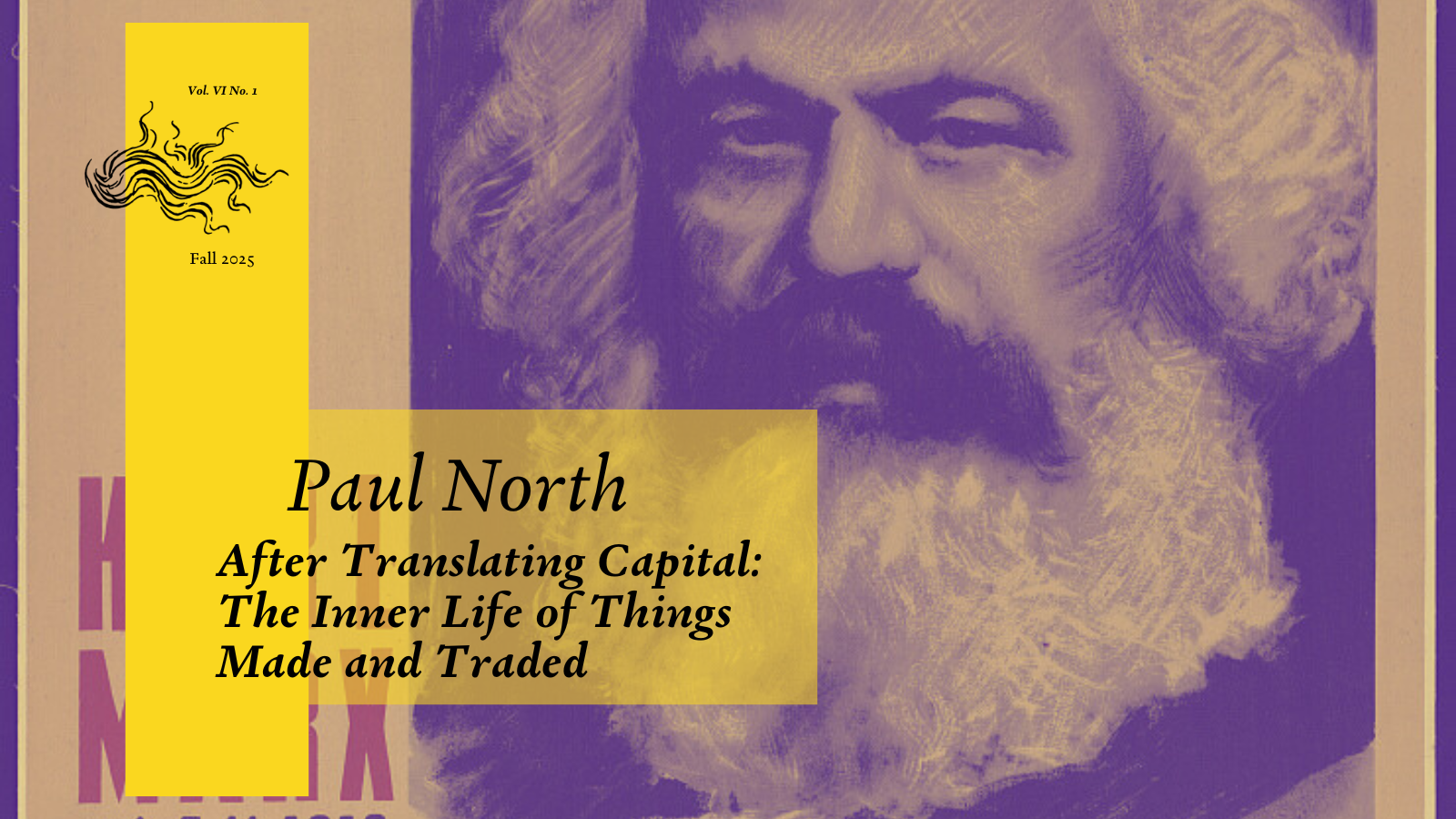 Marx was a great ape: he could do Goethe, he could do the Bible, he could do capitalists as well as workers, he could certainly do Hegel — better, he thought, than the legions of Hegel’s other apes. In a sense, he was, at any one moment, Marx-Goethe or Marx-Hegel or Marx-Ricardo. It is true, too, that Jews in German-speaking lands after emancipation — which started around 1750 — were granted, or were condemned to, this kind of mimicry. They observed German law, dressed in culturally appropriate ways, took on modern surnames, spoke the local language. They could be a good German, though always threatening to degrade into the bad Jew. They asserted rights as assimilated Jews while remembering their past as traditional Jews. Freed through the state, they were then beholden to the state. Marx describes this split in “On the Jewish Question” in stark terms. He dubs it “the decomposition of man into Jew and citizen.”
  Everybody knows I have them. My problems were bad then. I have value now. I actually love chugging green juice. Dialectical Behavioral Therapy is the name of the holy game. They give me homework over there. They put ice in my hands. They take the sunglasses off my face.
 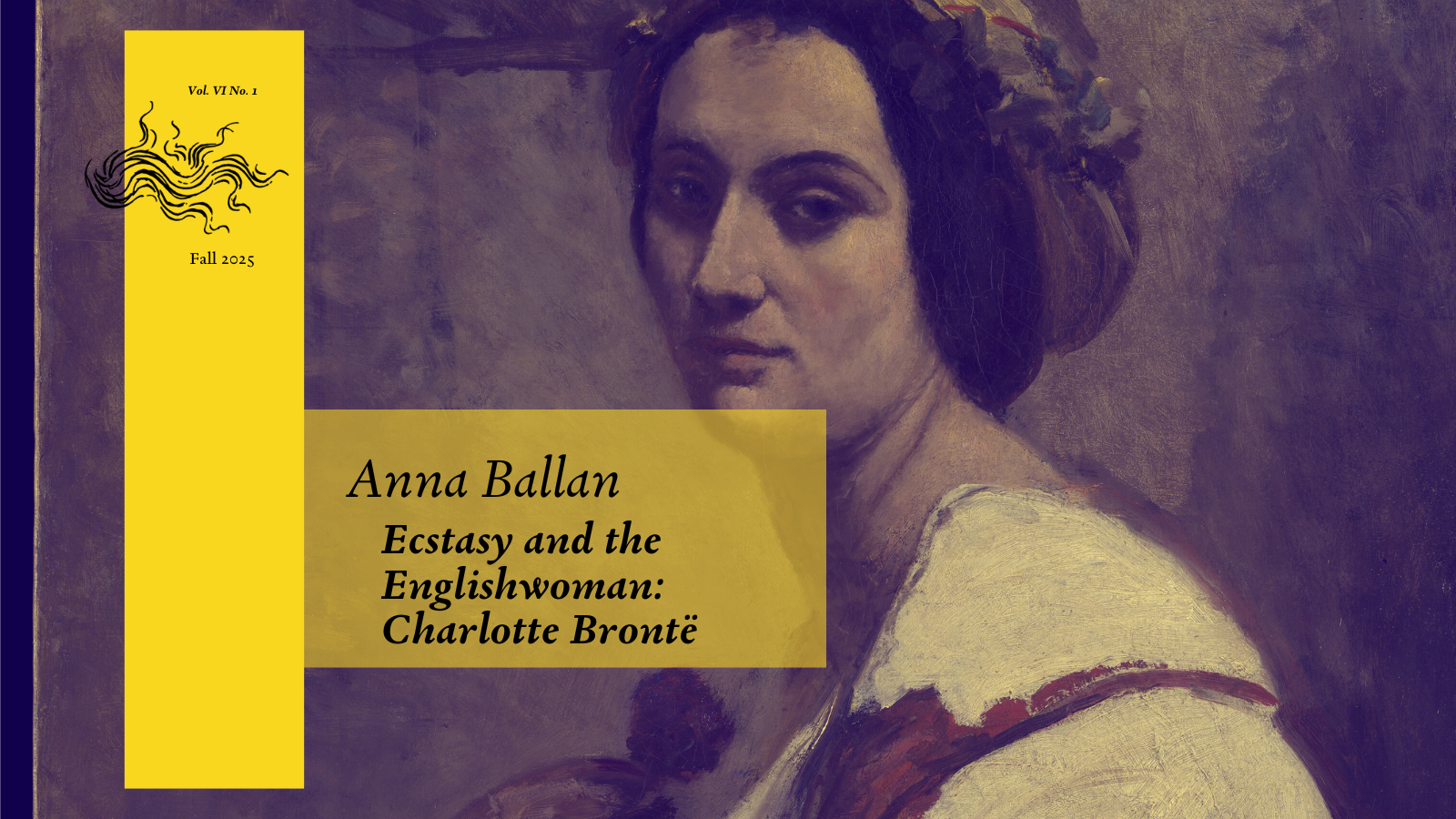 Charlotte Brontë and George Eliot had a similar quirk to their literary careers: after penning their respective masterpieces —
 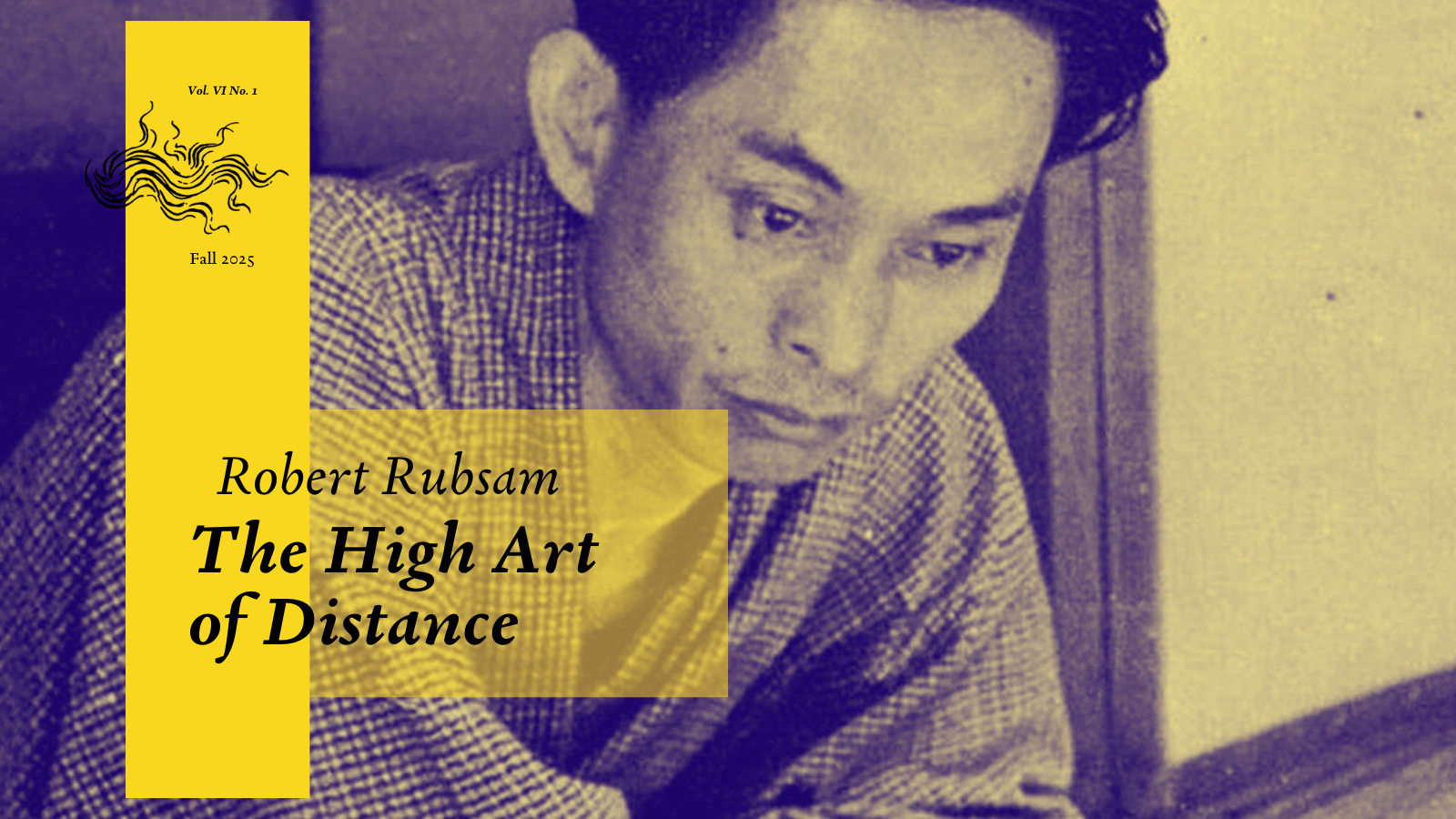 “Art, of course, lives in history,” said Elizabeth Hardwick. By which she meant that a novel emerges in its own time, and changes in its passage to our own. This — the likeness which is also an unlikeness, the unfamiliar familiarity — is the shock of reading classic literature, of literature even a generation or two removed from one’s own. We understand that a novel is essentially a historical survivor, written in one moment, picked off the shelf in another, yet we want it also to enlighten us about our own lives, of which the author necessarily knew nothing. Astoundingly, they quite often do. And yet it is in those gaps, those absences, that the real excitement lives. We should not recognize ourselves, and yet we do. We should not be moved, but we are. And then we are offended, or struck, or in some other way expelled, and the gap expands, and the past and the work and the author come to seem the distant shore they really are. We can visit, but not to stay.
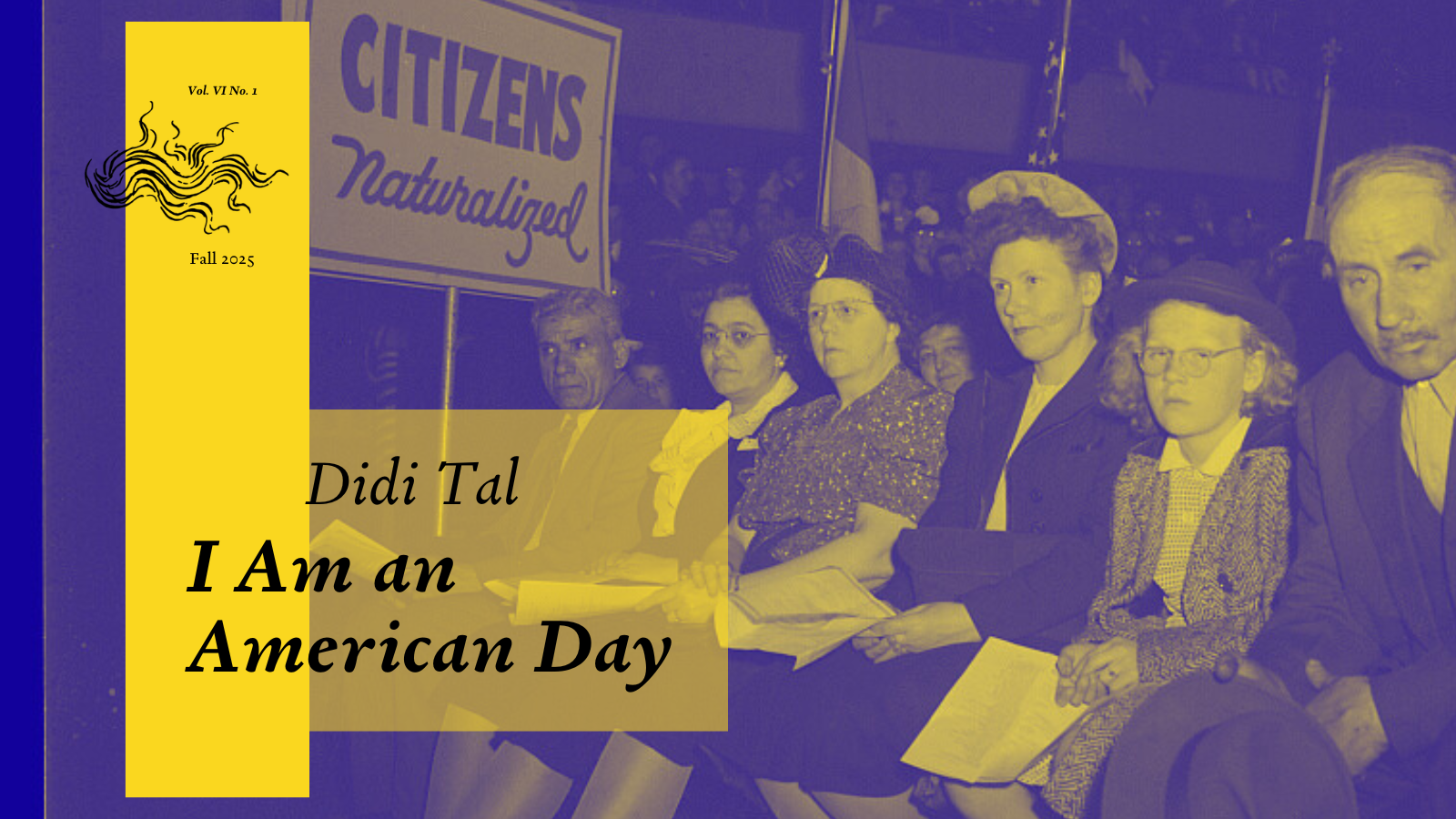 “In the huge gathering . . . there were, according to the official estimate . . . 1,250,000 persons. So far as available records indicated last night, this was the largest crowd that has ever assembled at a single point anywhere in the world.” This
  “Man is but a reed, the weakest in nature, but he is a thinking reed.” The line appears halfway through Pascal’s philosophical work,
  It was still early in the war. After four days of internet blackout — and, God knows, testing countless VPNs — I finally reached a stable enough connection to check my email. The last one was from a prestigious university in New York, where I was scheduled to begin my Ph.D. in the upcoming academic year. They had asked why I hadn’t confirmed my admission yet, warning that if I delayed any further, I might lose my spot. I responded politely that these nights I can’t sleep from the sounds of Israeli rockets landing right and left across my city, and that during the day, I’m constantly trying to make sure the many people I know across town are still alive. News that someone two oceans away was thinking about my fall plans felt like a comforting distraction. But truthfully — even if I had not been under rocket fire — the new travel restrictions against Iranian citizens would have made it impossible to attend that program anyway. I typed up a version of these sentiments, hit send, and then I stared at my phone screen, watching the VPN wheel spin, waiting for the email to leave “draft” status and finally be sent. The wait, of course, wasn’t short. As with all attempts at action during the days Tehran lost to war, it dragged on.